


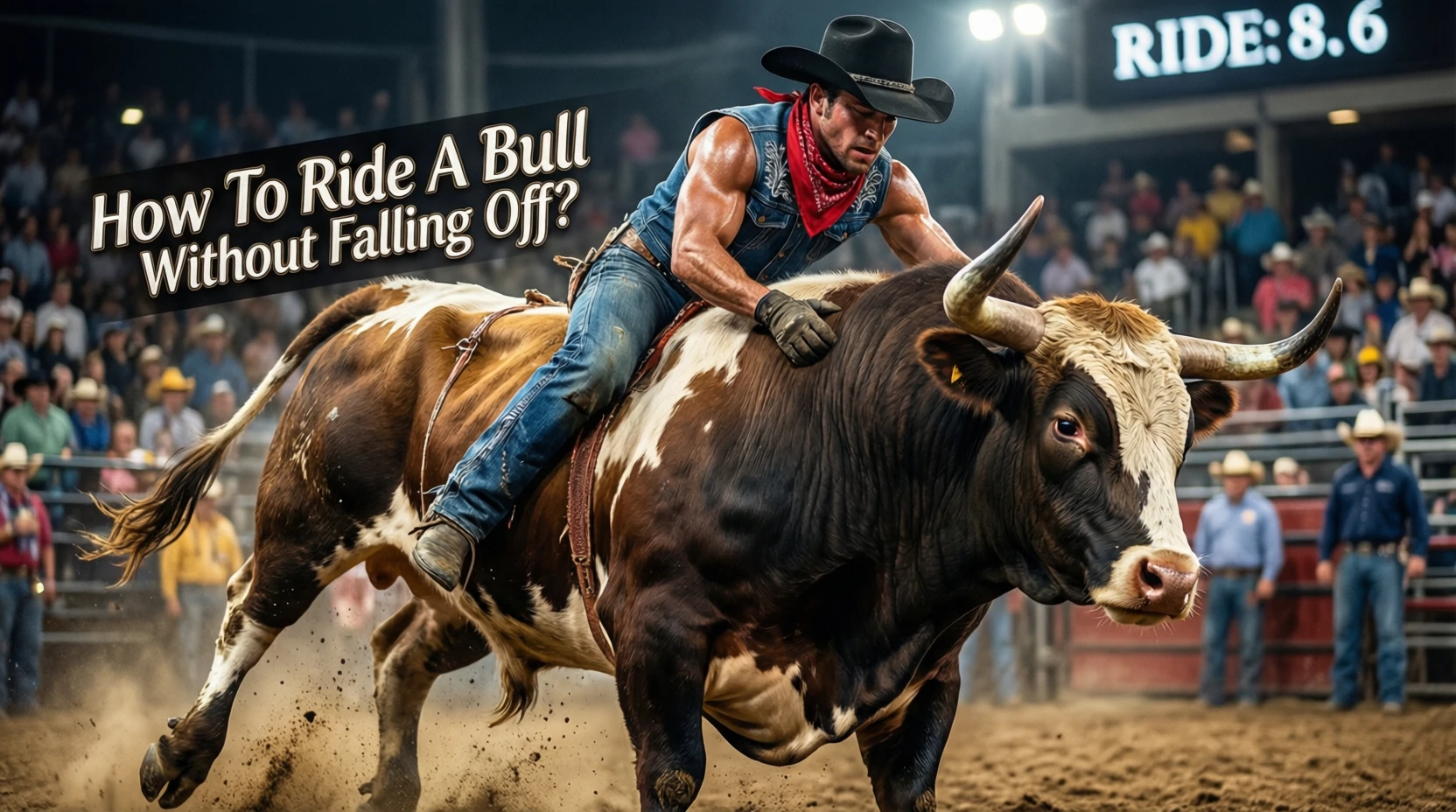
How To Ride A Bull Without Falling Off? To ride a bull without falling, focus on a strong grip on your legs, keep your back straight, and relax your upper body, using your free arm for balance and keeping an eye on the bull’s head to gauge movement. Shift your weight with the bull, leaning back as it goes down and up as it goes up, staying calm and breathing deeply to maintain control and avoid straining. And also it requires a combination of core strength, specific body positioning, and the ability to anticipate movement.
Here is the video guidance of professional rider demonstrating the basic riding position:

Table of Contents
What are Key Techniques:
- Grip with your legs: Squeeze the bull with your inner thighs and calves. Your legs are your primary anchor.
- Stay relaxed and upright: Keep your upper body loose, but maintain a straight back and square shoulders; don’t lean forward as it comes down.
- Watch the head: Focus your eyes on the bull’s head to gauge changes in direction and movement.
- Use your free arm: As per this YouTube video guidance, keep your free arm up and out for balance, letting it swing with the bull’s movement.

- Adjust your body: Lean forward as the bull comes up and lean down to keep your weight centered.
- Control your hips: Position your hips correctly so that your weight is on your legs, allowing them to catch you.
- Breathe and stay calm: Deep breaths reduce stress, helping you move with the bull rather than feeling tense and thrown off balance.
Here is the video guidance for a beginner’s guide to the chute procedure:

For Mechanical Bulls
- Talk to the operator: Ask them to adjust the settings to your skill level.
- Know when to bail: Learn to jump gracefully by taking your legs to one side and releasing them.
Here is the video guidance to see some common mistakes beginners make:

Master the Proper Grip
- Riding Hand: Use your dominant hand to hold the bull rope. An underhand grip (palm up) is standard for maximum control and stability.
- Wrap: Wrap the rope around your hand once, keeping your pinky finger aligned with the bull’s spine to keep it centered.
- Free Hand: Hold your non-dominant hand in the air to act as a “rudder” for balance. Avoid touching the bull or yourself with this hand, as this will result in disqualification in professional events.
Here is the video guidance:

Maintain Ideal Body Positioning
- Sit Forward: Position yourself as far forward as possible, almost sitting on your hands. This focuses your weight on the bull’s shoulders, where there is the least amount of movement.
- Leg Lock: Squeeze the sides of the bull tightly with your thighs and calves. This “roots” your lower body into the animal.
- Heels Down, Toes Out: Dig your heels into the sides of the bull with your toes pointing outward. This uses your legs as shock absorbers to handle sharp jolts.
Counter the Bull’s Movements
The ride is a “seen” move where you have to react to the bull’s head:
- If the head goes down: lean back slightly to avoid being pulled from the front.
- If the head goes up: lean forward and lift your hips to avoid falling from behind.
- When the bull turns: lean towards the turn (not away from it) to maintain your balance.
Safety and Training
- Essential Gear: Always wear a high-density foam safety vest and a bull riding helmet with a face mask to prevent life-threatening injuries.
- Conditioning: Focus on core and leg strength. Practice planks for stability and squats to build the “grip” strength your thighs need.
- Mental Focus: Keep your breathing slow and calm. Anxiety causes muscle tension, making it easier for the bull’s momentum to overpower you.
The Challenge: Understanding What You’re Up Against
Before you reach for the pile, know the scale of the job. You’re trying to combine strength and balance with an opponent that can weigh up to 2,000 pounds and generate bucking forces close to 1,800 pounds of torque.
- Clock: The official riding time is eight seconds. The clock starts when the bull’s front shoulder or hip clears the injury gate. It stops when your riding hand comes off the rope or you touch the bull, yourself, or the ground with your free hand.
- Stakes: Injuries are a real part of the sport. Studies show that more than a third of bull riding injuries are classified as serious. The most common serious injury is a fracture, and more than 10% of all injuries are concussions. This highlights why proper technique isn’t just about scoring – it’s about safety.
Training Your Way to Eight Seconds
Building ride time is a gradual process.
Are you looking for a breakdown compared to previous legendary Rodeo Riders like Guilherme Marchi & Trevor Brazile?
I can provide a side-by-side comparison of their career earnings and titles.

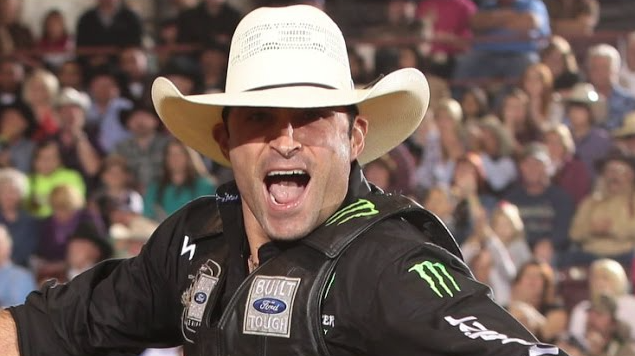
Guilherme Marchi
or

Trevor Brazile
Frequently Asked Questions: How To Ride A Bull Without Falling Off?
What’s the most common mistake beginners make bull riding?
The most common mistake beginners make in bull riding is poor body positioning when leaving the swing, which often results in leaning too far forward or back. This initial failure to find the center of balance often causes riders to be thrown within the first few seconds.
Can I practice on a mechanical bull?
Yes, you can practice on a mechanical bull, and that’s what they were originally invented for. Mechanical bulls are commonly found at bars and parties for entertainment, and they can also be used as a training aid for aspiring or professional bull riders to develop balance, core strength, and technique in a relatively safe and controlled environment.
What happens if the bull doesn’t buck well?
In professional bull riding, if a bull does not meet performance specifications, there are several immediate and long-term consequences for both rider and animal.
What age should someone start Bull riding?
You can start learning bull riding at Mutton Buston at ages 4-6, progressing to calf riding (around 8), steer riding (around 11), and then to peewee/junior bull riding (13-15) with younger bulls, while adults can start at any time, focusing on schools and skill-matched bulls, but professional PBR+1 requires an age requirement.
How long do you have to stay on a bull?
In professional bull riding, a rider must stay on the bull for exactly 8 seconds to qualify for a score.
Bull riding tips for beginners
Beginners should focus on safety, mastering basic techniques on practice equipment, and building core physical strength before attempting to ride a live bull. Professional coaching is highly recommended for proper form and guidance.
What is the trick to bull riding?
The basic “trick” of bull riding is to stay ahead, move with the rhythm of the bull, and use your legs and core for balance and grip, rather than holding on with your hands. Experienced riders often say it’s more like surfing the bucking motion than wrestling the animal.
How to improve bull riding balance?
Bull riding safety equipment requirements focus on head, torso, and limb protection, with mandatory helmets (especially for smaller riders), protective vests (for shock absorption), gloves (for grip), spurred boots (for control), and chaps (for leg protection). While rules vary by organization (such as PBR or NIRA), a helmet, vest, rope, gloves, boots, and chaps are standard for serious riders, with some venues requiring specific gear.
Mastering the bull Riding
Mastering the bull Riding is a lifelong pursuit that blends tradition with athleticism. It starts with respecting the risk, practicing the fundamentals, and understanding that every ride – whether it’s two seconds or eight – is a lesson. By focusing on technique, safety, and consistent practice, you build the foundation to not only survive, but to compete and score. Now the field awaits.