


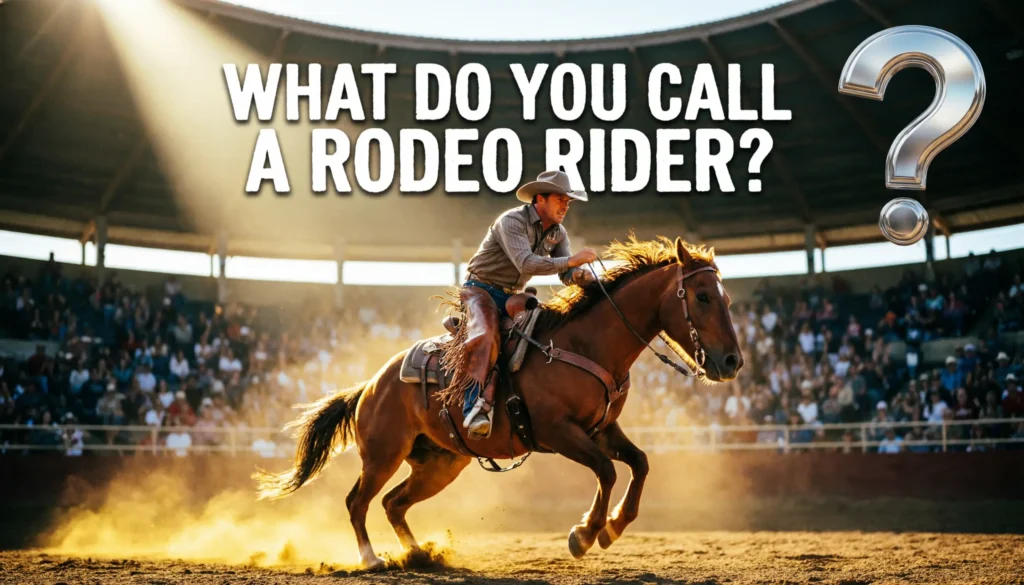
What Do You Call A Rodeo Rider? A rodeo rider is usually called a cowboy (male) or cowgirl (female), although they are also called rodeo athletes, competitors, or their specific discipline, such as bull riders, bronc riders, or barrel racers. They are professional competitors who demonstrate skills in riding, roping, and horsemanship.
A rodeo rider is called a cowboy if male and a cowgirl if female – but inside the sport, the official term is contestant. That is the word the PRCA uses in its own rule book and glossary, and it is what announcers, judges and entry offices say.
Beyond that, riders are named for the event they enter: bull rider, bareback rider, saddle bronc rider, steer wrestler (or bulldogger), tie-down roper, team roper (split into header and heeler), breakaway roper and barrel racer . Some arena roles are not contestants at all – the pickup men, the hazer and the bullfighters are working professionals with their own titles.
Table of Contents
The Short Answer
| What you’re describing | What to call them |
|---|---|
| Any competitor, formally | Contestant |
| Male competitor, generally | Cowboy |
| Female competitor, generally | Cowgirl |
| Rides bulls | Bull rider |
| Rides bucking horses with a rigging, no saddle | Bareback rider |
| Rides bucking horses with a saddle and rein | Saddle bronc rider |
| Any bucking-horse rider, informally | Bronc rider |
| Wrestles a steer to the ground | Steer wrestler or bulldogger |
| Ropes and ties a calf | Tie-down roper (also calf roper) |
| Ropes the steer’s horns in team roping | Header |
| Ropes the steer’s hind legs in team roping | Heeler |
| Ropes a calf with a breakaway string | Breakaway roper |
| Runs the cloverleaf pattern | Barrel racer |
| Hasn’t yet won $1,000 in the PRCA | Permit holder |
| Full PRCA member | Card holder |
“Cowboy” vs. “Contestant”: The Difference That Matters
This is the part that most people miss, and it’s the real answer to the question.
- Cowboy is an identity. It carries the ranch history, the clothing, the culture – and plenty of people who ride in rodeos do not work cattle for a living. Rocker Steiner, the 2025 bareback world champion, has said outright that he does not identify with the word.
- Contestant is a job title. The PRCA Glossary uses “competitor” – in the definitions of hurdles, draw, pigtail and timed events. It’s neutral, it covers men and women equally, and the paperwork says so.
- Rodeo Athlete is the third register, increasingly used in broadcast and sponsorship. It signals professionalism to audiences outside the Western world.
Practical guidance: In conversation, “cowboy” and “cowgirl” are correct and warmly accepted. In writing about the sport, “contestant” or “rodeo athlete” is more accurate, and “bull rider” or “barrel racer” is even better if you know the event.
How Many Terms Describe One Rider?
Number of distinct, correct titles for a single competitor, by event.
Counts include the general term (cowboy/cowgirl), the official PRCA term (contestant), the event title, any alternate event name (bulldogger, calf roper), and role-specific titles such as header or heeler.
Roughstock Riders: Judged on the Ride
Roughstock competitors ride bucking animals for eight seconds and are scored out of 100 – 50 points for the rider and 50 for the animal.
- Bull rider. A flat braided rope with one hand, eight seconds, no touching the bull or himself with the free hand.
- Bareback rider. No saddle and no reins. He holds a leather handhold called a rigging-nicknamed the suitcase handle-and must mark, meaning both heels are over the horse’s shoulders on the first jump. Widely considered the most physically punishing event in rodeo.
- Saddle bronc rider. Uses a distinctive hornless saddle and a thick braided bronc rein, judged on rhythm and control. It is often called the classic event of rodeo because it comes directly from farm horse breaking.
- Bronc rider is an informal umbrella term for both horse events. Within the sport, people define which.
Timed Event Contestants: Racing the Clock
- Steer wrestler, also known as bulldogger. Falls onto a steer while running from a galloping horse and turns it to the ground by the horns. Sometimes called the big man event.
- Tie-down roper, also known as calf roper. Ties a calf with a rope, dismounts, stands on its back, and ties three legs with piggin’ string, finishing with a knot called a hooey.
- Team ropers compete in pairs. The header throws first, head or over the horns. The heeler grabs both hind legs-grabbing only one leg is a five-second penalty.
- Breakaway roper. The rope is attached to the saddle horn with a string; when the calf is caught, the rope breaks and the flag falls. No losses, no ties. The fastest-growing event in the sport.
- Barrel racer. A cloverleaf pattern runs around three barrels. A tipped barrel adds five seconds.
- Steer Roper. Competed in fewer rodeos, but has its own world championship.
The People Who Aren’t Contestants
Some of the most important riders in the field aren’t competing at all – and calling them competitors is the most common mistake fans make.

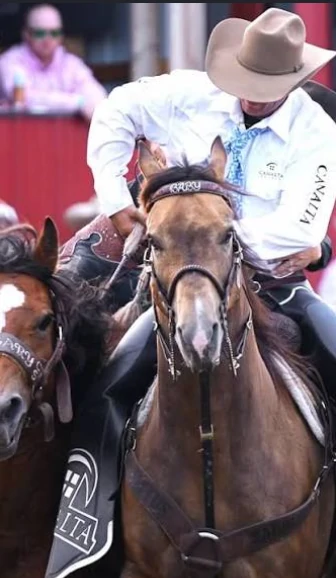
Pickup men
Two mounted cowboys who help the roughstock riders safely dismount, release the edge leash, and lead the horses and oxen out of the arena. Their expertise is such that most rides end without incident.

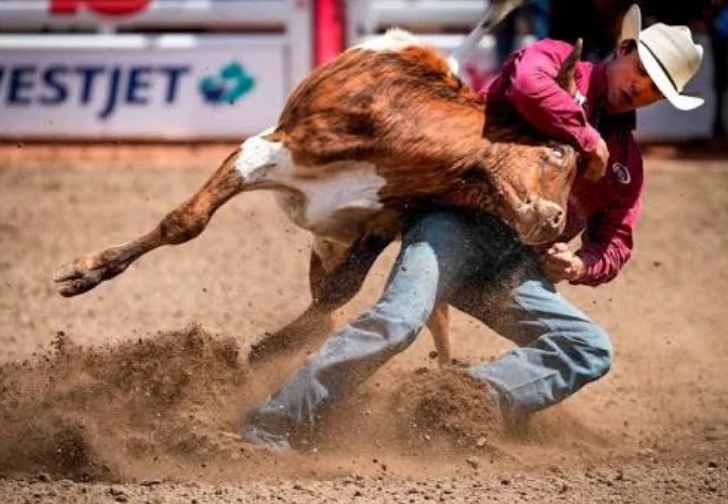
Hazer
In steer wrestling, the hazer rides on the opposite side of the steer to keep it moving straight so the wrestler can make his catch. The PRCA notes that the hazer’s job is almost as important as the wrestler’s – and the hazer earns nothing from the win.

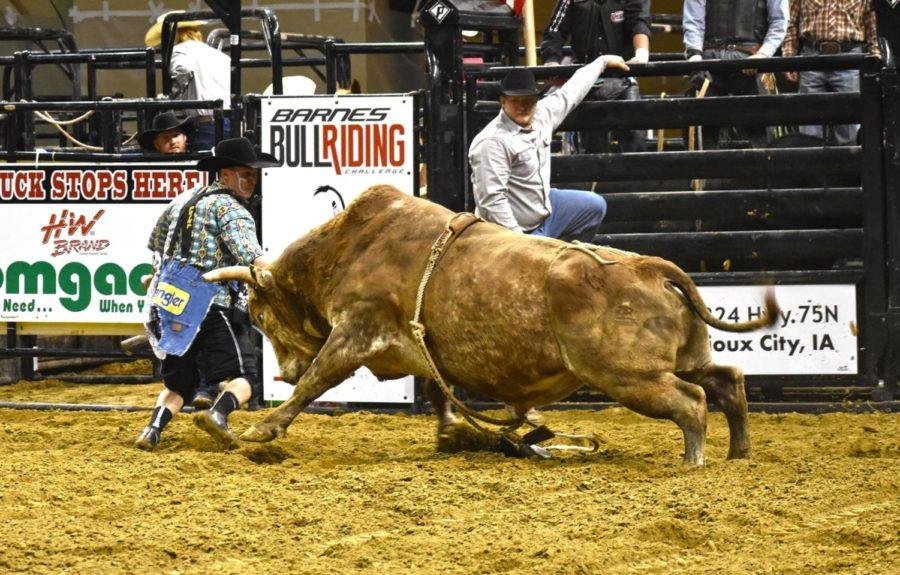
Bullfighters
Protect the fallen bull riders. They are not rodeo clowns, although the roles overlap historically. The barrel man works from a barrel and manages the entertainment.
Flagman, gateman, chute boss, stock contractor, announcer, judges. Everyone has a title, and none of them are “riders.“
Rodeo Terminology Fans Should Know
| Term | Meaning |
|---|---|
| Draw | The random assignment of which animal a contestant gets |
| Nodding | The signal a contestant gives when ready for the gate to open |
| Mark out | Heels above the shoulders on the first jump, required in roughstock |
| Re-ride | A second chance when the animal doesn’t buck to specification |
| Rank | Describes an especially difficult animal – a compliment |
| Average | The aggregate score across all rounds of a rodeo |
| Go-round | One round of competition |
| Turn out | Withdrawing from an entered rodeo |
| Permit holder | A contestant who hasn’t yet won $1,000 in PRCA competition |
| Hooey | The finishing knot in tie-down roping |
| Piggin’ string | The short rope used to tie a calf’s legs |
| Pigtail | The string that breaks if a horse leaves the box too early |
| Slack | Overflow competition held outside the main performance |
Greatest Rodeo Riders: The Names Behind the Titles
| Rider | Why the name matters |
|---|---|
| Trevor Brazile | 26 PRCA World Championships, including 14 all-around titles – the most of any. Called the King of Cowboys. |
| Ty Murray | Seven all-around world titles; PBR co-founder; inducted into the RODEOHOUSTON Hall of Fame in 2026 |
| Larry Mahan | Six all-around titles plus two bull riding titles; rodeo’s first mainstream celebrity |
| Jim Shoulders | 16 world championships across bull riding, bareback and all-around |
| Tuff Hedeman | Three PRCA bull riding titles and the 1995 PBR championship |
| Mary Burger | Won the WPRA barrel racing world title in 2016 at 68 years and 4 months – the oldest world champion in rodeo history, male or female |
| Stetson Wright | Multiple all-around world championships as the dominant modern all-around cowboy |
| Riley Webb | Three straight PRCA tie-down world titles (2023 – 2025) and the youngest athlete ever past $1 million in career earnings |
Milestones Behind the Names
Career world championships held by riders named in this guide.
Brazile’s 26 titles include a record 14 all-around championships. Hedeman’s total combines three PRCA bull riding titles and the 1995 PBR world championship. Burger’s two WPRA titles include the 2016 win that made her the oldest world champion in rodeo history.
Case Study: One Rider, Five Different Correct Titles
The web page is the clearest example of why there is more than one answer to this question.
Depending on the context, each of these is true for the same person:
- Cowboy – the general term.
- Contestant – what the PRCA entry system calls him.
- Tie-down roper – his event.
- Calf roper – the same event, older usage, still common.
- World champion – earned three times over
His record speaks volumes. Webb took home the 2022 Wrestle Rookie of the Year award in both the tiedown and all-around, qualified for the NFR that season and finished 10th in the world. He then won the world championship in 2023 for $452,851 – a single-season record at the time – and repeated it in 2024 and 2025, becoming the first tiedown roper to win three consecutive gold buckles in over forty years. During Round 4 of the 2024 NFR, he became the youngest cowboy in PRCA history to pass $1 million in career earnings at 21 years, 4 months and 4 days.
It’s not wrong to simply call him a “rodeo rider.” That’s the least informative option available.
(A note on accuracy: Some online sources credit Webb with the “WrestleMania Rookie of the Year” award. That’s a mistake – WrestleMania is professional wrestling. His award was WrestleMania Rookie of the Year, rodeo’s rookie honor.)
Case Study: The Oldest Champion in the Sport
“Rodeo rider” doesn’t necessarily mean a young man because of Mary Burger.
Burger won her first WPRA barrel racing world title in 2006 at age 58, making her the oldest WPRA world champion at the time. Ten years later, she did it again. In 2016, she won the Houston Rodeo in March, won the Calgary Stampede in July, set a WPRA regular-season earnings record of $190,977, and entered the NFR with a lead of more than $74,000. She won the world title at age 68 years and 4 months – the oldest world champion in professional rodeo history, male or female, in any event, breaking a record that had stood since Ike Rude won the steer roping title at age 59 in 1953.
She trained her winning horses She was inducted into the National Cowgirl Museum and Hall of Fame in 2017 and into the 2026 class of the Pro Rodeo Hall of Fame.
Expert Opinions – What Do Insiders Say?
Bo Vocu, President of INFR & Retired Bull Rider:
“Rodeo is one of the few opportunities in Indian country to get out, make a living, get an education.
John Kent, Idaho Rodeo Fan (Interview Excerpt):
“The term Wild West comes from the frontier region west of the Mississippi. Winters get below 40. These men and women carry on that legacy – but these are professional athletes, not relics.”
Bun B, Houston Rapper & Rodeo Advocate:
“Black people have contributed to cowboy culture since its beginning. With this surge in interest, people will finally know that they were always a part of this story.”
Future Rodeo Rider Stars
- Rocker Steiner – 2025 Bareback World Champion, first in his event to earn $500,000 in a season, returning from June 2026 neck surgery
- Wacey Schalla – PRCA’s youngest million-dollar cowboy, competes in multiple events.
- Bradley Miller – Sits at No. 2 in the 2026 Bareback standings within an $8,000 lead.
- Cole Franks – Four-time NFR qualifier with over $1 million in career earnings.
- Hali Williams – 2026 RODEOHOUSTON breakaway roping champion, fastest-growing in the event.
- Riley Webb – Three straight tiedown titles at age 22, with a career that is just beginning.
Frequently Asked Questions: What Do You Call A Rodeo Rider?
What do you call a female rodeo rider?
A female rodeo rider is primarily called a cowgirl. These athletes compete in a variety of events, including barrel racing, breakaway roping, and rough stock events such as bronc riding. Although “cowgirl” is the standard term, they are sometimes simply called rodeo riders or, in the context of professional ranching, cowboys.
What is the official term for a rodeo competitor?
Widely recognized as the “most dangerous eight seconds in sports,” bull riding is the most dangerous event in rodeo. It accounts for approximately 50% of all rodeo-related injuries, with risks ranging from concussions to fatal trampling.
What do you call a rodeo rider who rides bulls?
A rodeo rider who rides bulls is simply called a bull rider. These athletes, often referred to as cowboys, specialize in staying mounted on a bucking bull for eight seconds to earn a score, a feat that requires immense skill, balance, and bravery, sometimes referred to as a “rank” ride when the bull is difficult to manage.
Do rodeo riders keep the animals they ride?
No. These animals are owned by specialized stock contractors, not riders.
What is the difference between a bareback rider and a saddle bronc rider?
A bareback rider uses only a leather rigged handhold with no saddle or reins. A saddle bronc rider uses a special hornless saddle and bronc reins and is judged on rhythm and style.
What is a rodeo rider on a horse called?
A rodeo rider on horseback is usually called a cowboy or cowgirl, but specific titles depend on the event. Those who ride the bucking horses are known as bronc riders (especially saddle bronc or bareback riders), while those who assist them on horseback are called pickup riders or pickup men.
How long must a rodeo rider stay on the animal?
In roughstock rodeo events – specifically bull riding, bareback riding, and saddle bronc riding – a competitor must remain on the animal for eight seconds to earn a qualifying score. The clock starts when the animal’s shoulder or hip breaks the plane of the gate and stops when the rider touches the animal with his free hand or falls.
Do rodeo riders wear helmets?
Yes, many rodeo riders wear helmets, although this often depends on the specific event and age of the rider. The trend toward protective headgear has grown significantly due to safety concerns and rule changes.
Are rodeo riders considered professional athletes?
Yes, rodeo riders are widely considered professional athletes. While their sport has deep roots in traditional ranch labor, the modern rodeo circuit operates as a high-end professional industry with specialized training, world championships, and significant media coverage.
What is the oldest rodeo?
The title of “oldest rodeo” is a subject of historical debate, with different towns claiming the honor based on specific criteria such as continuous operation, official documentation, or the first person to enter.
Who has won the most rodeo world championships?
Trevor Brazile holds the record for the most Professional Rodeo Cowboys Association (PRCA) World Championships with a total of 26 titles. Known as the “King of the Cowboys,” he achieved these championships in multiple events, including tie-down roping, steer roping, team roping, and a record 14 all-around titles.
What Is A Rodeo Star Called?
A rodeo star is usually called a cowboy (male) or cowgirl (female), often referred to as a rodeo athlete or competitor. Top performers are often recognized by their specific, highly skilled discipline, such as bull rider, bronc rider, barrel racer, or bulldogger (steer wrestler).
What is a bulldogger?
Another name for a steer wrestler – a competitor who falls from a galloping horse and turns the steer toward the ground with his horns.
What is a hazer in rodeo?
In steer wrestling, the hazer rides on the opposite side of the steer to keep it running straight. He is essential to the race but does not earn any prize money. Sometimes misspelled “heiser.”
What are pickup men?
Two mounted cowboys who help the roughstock riders safely dismount, release the edge leash and lead the animals out of the arena. They are working professionals, not competitors.
What is the difference between a header and a heeler?
In team roping, the header first ropes the steer’s head or horns. The heeler then grabs both hind legs. Grabbing only one hind leg is a five-second penalty.
What is a calf roper called?
A tie-down roper in current PRCA usage, although “calf roper” is widely used and accurate.
Are rodeo riders professional athletes?
Yes, they compete in a sanctioned professional circuit with world championships, world standings, sponsorships and national broadcast coverage – while paying their own entry fees and travel.
What is a permit holder in rodeo?
A PRCA competitor who has not yet won their first $1,000 in PRCA rodeos. Reaching this mark allows them to apply for full card-holding membership.
Who has won the most rodeo world championships?
Trevor Brazil, with 26 PRCA World Championships, including a record 14 all-around titles, earned him the nickname King of the Cowboys.
Who is the oldest rodeo world champion?
Mary Burger, who won the WPRA barrel racing world title in 2016 at the age of 68 years and 4 months – the oldest in any event, male or female.
What does “rank” mean in rodeo?
This describes a particularly difficult-to-sell animal. Giving a bull or horse a grade is a compliment to the animal, and a good ride scores higher.
Sources & Reference
- PRCA — Official Rodeo Terminology glossary (contestant, hazer, draw, permit holder, hooey, pigtail)
- ProRodeo Hall of Fame — Rodeo Terms (header/heeler, timed events, Triple Crown)
- Professional Rodeo Cowboys Association (PRCA) — world standings, rules and membership
- Women’s Professional Rodeo Association (WPRA)
- Lewiston Roundup — Rodeo Terminology (pickup men, piggin’ string)
- Wichita Falls PRCA Rodeo — Rodeo 101 (the hazer’s importance, ground money)
- Travel South Dakota — Rodeo Terms and Definitions (flanking, suitcase handle, tipped barrel)
- Poway Rodeo — Rodeo Terminology (flagman, head wrap, rowel, go-round)
- CalfRoping.com — “Behind the Top 15: Riley Webb” (2022 Resistol Rookie of the Year; youngest past $1 million)
- The Cowboy Channel — Riley Webb wins 2023 world championship ($452,852 record)
- CalfRoping.com — “$450K King: Riley Webb is the 2023 PRCA Tie-Down World Champion”
- TwisTed Rodeo — Webb’s third consecutive world title, first in 40+ years
- Durango Boots — Riley Webb profile (three-time world champion)
- Wikipedia — Mary Burger (2006 and 2016 WPRA titles; oldest world champion record)
- ProRodeo Hall of Fame — Mary Burger induction profile (68 years, 4 months)
- ESPN — “At 68, Mary Burger sits atop the barrel racing ranks” (2016 season records)
- Sports Illustrated — WPRA 2026 Hall of Fame class
- Wikipedia — Steer wrestling (bulldogging definition)
- Wikipedia — Larry Mahan (six all-around titles, two bull riding titles)
- Wikipedia — Tuff Hedeman (three PRCA titles, 1995 PBR championship)
- Wikipedia — Mary Walker (previous oldest-champion record, 2012)