


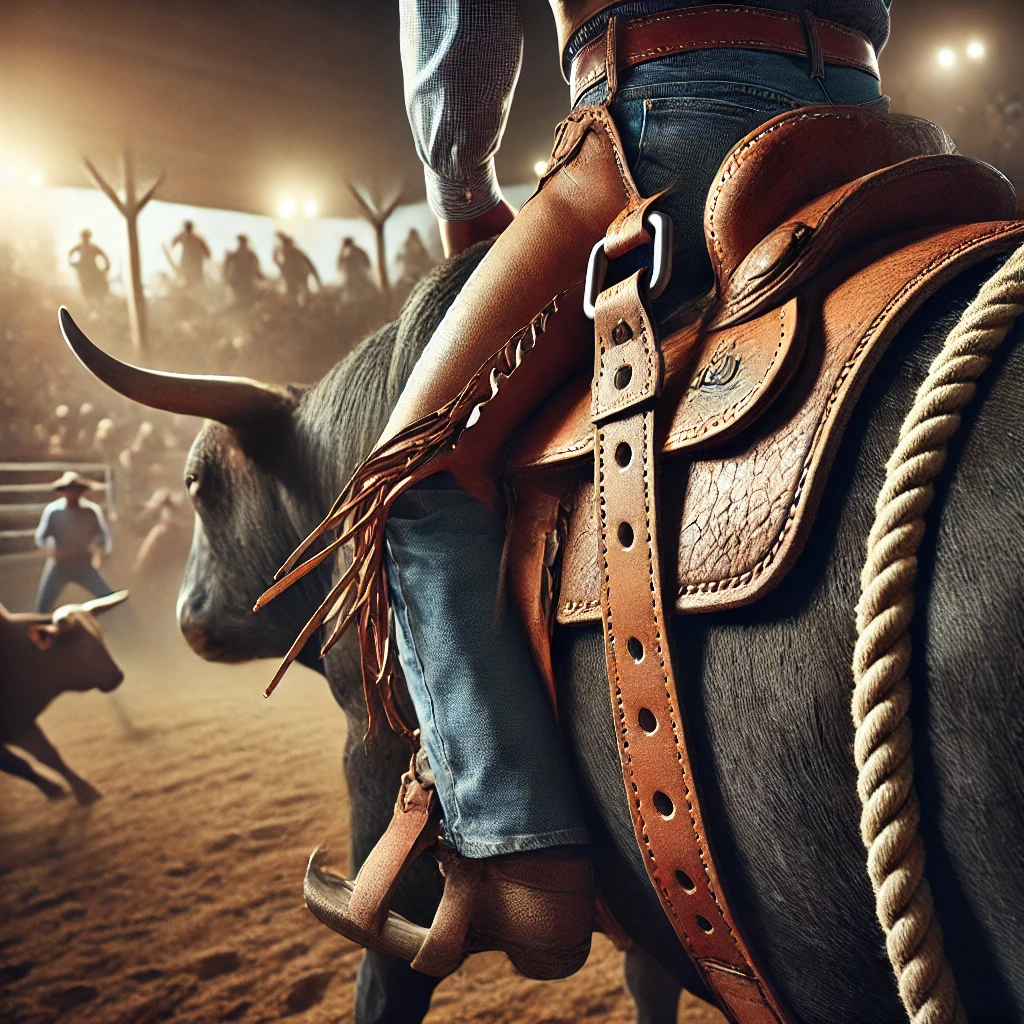
What Does The Flank Strap Do? A flank strap is a soft, fleece-lined strap that is placed around the hips (not the abdomen or genitals) of a rodeo animal to encourage striking and kicking during rodeo rough stock events.
A side strap stimulates the bull or bronco’s natural bucking reflex. It is made of soft cotton rope (bull) or padded leather (bronco), positioned on the flank muscles. It is issued immediately after every ride and is regulated by 60+ PRCA animal welfare rules.
Table of Contents
Key Facts About Flank Straps:
The primary function of the flank strap is to encourage consistent, high-quality bucking performance from bulls and broncs during competition. Without it, some animals will buck unexpectedly or not at all during an event – making fair scoring impossible for riders and judges alike.
The Flank straps serves the specific Key Facts roles:
- Purpose: Encourages bulls to use their hind legs more, increasing the intensity and height of their jumps, which is essential for bull riding scores.
- Encourages Bucking – The leash creates a mild irritation on the animal’s sensitive side area, triggering a natural instinct to kick to relieve the sensation, much like a horse wags its tail at a fly.
- Placement: Placed around the flank (abdominal area), especially in front of the hind legs, and never tied around the testicles, which is a common misconception.
- Material: Usually made of soft cotton or sheepskin-covered rope to prevent injury, friction, or chafing.
- Function: It is pulled to create a sensation of discomfort or “tickling” rather than pain, signaling the bull that it is time to perform.
- Ensures consistent scoring: By standardizing the stimulus, judges can score both the rider and the animal on an equal basis in each competitive round.
- Regulation: There are strict regulations on its use to ensure the safety and welfare of the animals.
- Improves rider safety: A properly fitted leash causes the bull to kick its hindquarters down and out rather than rearing backwards, which is significantly safer for riders who are being thrown.
Critically, the Flank straps does not replace the bull’s natural desire to buck – it enhances it. Elite bucking bulls like Bushwacker and Bodacious were bred specifically for explosive bucking ability through generations of selective genetics. The flank strap is a cue, not a reason.
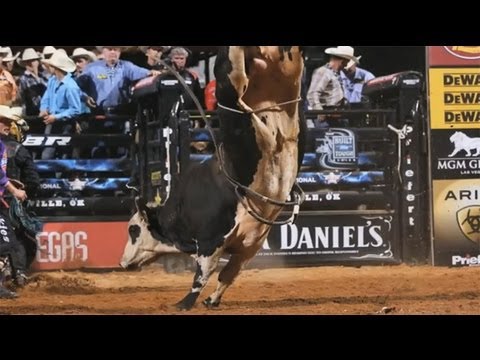
This Interview video explains the truth about the flank strap and how to use it in bull riding:

What Are Flank Straps Made Of?
Flank strap construction is not one-size-fits-all. The materials used between bull riding and bronc riding are significantly different, each suited to the anatomy and movement patterns of a specific animal. These are made of soft materials to prevent injury, they typically feature sheepskin, fleece, or soft cotton linings. The outer shell is made of durable materials such as leather (often leatherette or harness leather) or nylon, paired with a padded, non-abrasive lining and stainless steel hardware.
Here is the Video Podcast for The Truth About Frank Strap made of

For Bulls: Soft Cotton Rope
The Professional Rodeo Cowboys Association (PRCA) mandates that bull leashes be made of soft, braided cotton or poly rope with a minimum diameter of 5/8 inch and and around 9 feet long. This specification was intentionally chosen because the material is flexible, non-abrasive, and gentle against the animal’s coat. Unlike horse leashes, bull leashes typically do not require any additional lining – the soft rope is the only contact surface. The “tickling” sensation comes from the gentle movement of the rope, not from pressure or impact.
For Broncs: Padded Leather with Fleece Lining
Saddle bronc and bareback riding straps use a fundamentally different design suited to the horse’s anatomy. The core is made from high-quality, flexible leather for structural strength, and is universally lined with super-soft fleece, shearling, or neoprene padding – 4 to 6 inches wide – to ensure the leather core never makes direct contact with the horse’s skin. This distributes any pressure evenly across the large muscle group and prevents chafing entirely.
The Quick-Release Mechanism
Regardless of the type of animal, every professional-grade flank strap includes a quick-release buckle that is operated by the designated flank man. With a single pull of the rope, the entire strap drops when the rider is dismounted or thrown. This procedure is mandatory at all PRCA and PBR sanctioned events – no exceptions. Straps are replaced by stock contractors approximately every 2 to 3 seasons due to normal wear and tear, not due to damage to the animal.
| Feature | Bull Flank Strap | Bronc Flank Strap |
|---|---|---|
| Core material | Soft braided cotton or poly rope | High-quality flexible leather |
| Lining | None – rope is inherently soft | Fleece, shearling, or neoprene |
| Width | 5/8 inch minimum (PRCA mandated) | 4 to 6 inches wide |
| Cost range | $20 – $35 | $45 – $75 |
| Replacement cycle | Every 2–3 seasons | Every 2–3 seasons |
| Release mechanism | Quick-release buckle | Quick-release buckle |
Source: Rodeomart.com
Mark Carter: “The idea that we use anything that hurts our animals is nonsense. These animals are our livelihood. A stressed or injured animal will not perform. We invest thousands in their care, feed, and genetics. The flank strap is a tool, and like any good craftsman, we choose the softest, best material available.” – Mark Carter, third-generation stock contractor, Wyoming PRCA permit holder
How Does a Flank Strap Work? The Science of the Buck
It works as a tactile, uncomfortable annoyance that makes the animal kick higher and jump more, acting as a “cue” to perform rather than a source of pain. The flank region – just in front of the hind legs, behind the rib cage – is one of the most touch-sensitive areas of an bull or horse’s body. It is dense with sensory nerve endings that have evolved to detect predators trying to grab the animal’s hindquarters.
Stock contractor Binion Cervi described it simply: “The flank strap is like a fly that just landed on my ear and I waved it away – you’re trying to get the fly off of you.”
Here is the Video guidance How To Put A Bull Flank On The Right Way:
- Placement and Function: The strap sits around the belly and only tightens when the animal releases the bite, acting as a distraction that encourages the animal to pull out and move its hind end.
- Non-painful: It is not placed around the genitals, nor is it intended to cause pain, which hinders movement, not promote booking.
- Signaling Mechanism: It acts as a cue for the animal to begin its performance. Sensation is often described as feeling like something tight or irritating around one’s waist.
- Removal: A quick-release mechanism is used by pickup men to remove the strap immediately after the 8-second ride is over.
- Misconceptions: It is a myth that the strap forces a horse or bull to buck if they are not already inclined to do so.
Historical Evolution
Flank straps have been used in organized rodeos since the early 1900s, initially as simple leather ropes without padding. The major welfare improvement came in the mid-1900s when sheepskin linings were introduced, eliminating the risk of bare leather tearing. The most important innovation was the quick-release buckle – now mandatory at all professional events – which ensures that the animal only experiences sensation while being ridden. Today, veterinarians and animal scientists conduct ongoing reviews of strap designs and regulations.
- Early 1900s: Horses were often naturally saddled but often ran in the arena. Early photographs (1908–1910) show unstrapped broncs that were flatter than modern animals.
- 1920s: Early versions of the strap were sometimes called “chinchillas”.
- Source: Studyguides.com
- “Australian” migration: The modern, wide, leather belt-style strap was reportedly developed in Australia in the late 1930s and had migrated to American rodeo circuits by the 1950s.
- Standardization: Over time, materials moved from basic ropes to fleece-lined leather (for horses) and soft cotton rope (for bulls) to prevent skin irritation or injury.
Why Cowboys Want It Fitted Correctly
Cowboys ensure that a Flank strap is fitted correctly – tight but not excessively tight – to encourage maximum performance, safety, and comfort for the animal. Placed around the hips and waist, a properly adjusted strap acts as a “distraction” or “cue” that encourages the animal to kick and jump rather than causing pain.
A properly installed Fitted Flank Straps produces explosive, high-scoring performance that benefits both the contractor’s reputation and the rider’s score. Using a strap correctly is literally in everyone’s financial best interest.
Dr. James Hall: “In my clinical examinations, I have almost never seen a lesion caused by a properly fitted strap. These animals are bred to buck; the strap is a cue, not a reason. Their standards of care are exceptionally high.” – Dr. James Hall, veterinarian with 20 years of PRCA event experience, Kansas State University College of Veterinary Medicine
Why Does a Flank Strap Make a Bull Buck? Instinct vs. Pain
Flank Strap Make a Bull Buck to encourage jumping and kicking – “bucking” – by creating a disturbing, tickling sensation rather than pain.
- Tactile Stimulation: The flank is a very sensitive, ticklish area for cattle. A loose leash – not tightly fastened – prompts the animal to kick it to remove it.
- “Belt” analogy: It behaves like a tight leash, encouraging the bull to feel less restricted in its hindquarters.
- Signaling time to work: For many bulls, the application of a leash to the flank signals that it is time to perform, as according to one YouTube user, they often behave calmly until the leash is adjusted.
- Natural Instinct: Rodeo bulls are specifically bred for this instinctive response. They naturally want to remove weight or restraints from their backs.
Bulls and Broncos are selectively bred for their natural bucking ability over generations. The strap enhances existing genetic behavior; it does not create it.
| Study / Source | Year | Key Finding |
|---|---|---|
| Colorado State University | 2016 | No significant cortisol (stress hormone) increase in bulls post-rodeo |
| Texas A&M University | 2020 | Heart rates similar in animals with and without flank straps |
| University of Sydney | 2018 | Horses showed no significant stress markers with properly fitted straps |
| PBR Veterinary Report | 2023 | 0.05% of bulls had minor flank abrasions – all minor |
| American Veterinary Medical Association | 2023 | 0.00041% of PRCA animals injured – fewer than 1 in 2,500 |
The most persistent Myths & Facts, and what the evidence actually shows:
| Common Myth | What the Evidence Shows | Common Fact |
|---|---|---|
| A strap is tied around the bull’s genitals | Placed on the hindquarters 12+ inches from the genitals. Over half of the booking horses are female – this makes it physically impossible for a large portion of the rodeo stock. | The strap is placed around the flank and waist, well away from the animal’s genitals. |
| Bulls only buck because of pain | Bulls and Broncos are naturally prepared to eliminate perceived threats. Generations of selective breeding produce animals with extraordinary natural instincts. | These bulls are genetically bred to buck. The leash encourages them to do so more effectively. |
| The strap is left on for long periods | The quick release mechanism drops the strap within seconds of the ride ending. In most cases, the total contact time is less than 10 seconds. | |
| Straps cause significant injuries | PRCA data shows that 0.08% of bulls suffer minor abrasions. The injury rate is less than 1 in 1,000 animals exposed. | Most straps are padded with sheepskin or neoprene to prevent skin irritation or chafing. |
How Tight Should a Flank Strap Be?
The bull’s flank strap should be adjusted comfortably, not tightly, and placed around the front side of the hind legs to encourage extension, not cause pain. Too loose and the bull produces sluggish, flat bucks that score poorly. Too tight and the animal’s movement is restricted – leading to falls, low scores, and potential welfare violations. The PRCA and PBR have specific, enforceable standards.
Flank Strap Tightness Standards
- Average Fit: Tight enough to stay in place, but not so tight that it restricts the bull’s natural movement.
- Specific Bull: The tightness is customized to each bull’s preference – some perform better with a “loose,” “average,” or “heavy” (snugger) setting.
- Safety Limit: If pulled too far, it will restrict the bull’s movement, causing poor performance and possibly a “re-trip” for the rider.
| Factor | PRCA Standard | PBR Standard | Key Note |
|---|---|---|---|
| Base gap | 4–6 inch gap | 3–5 inch gap | Always start loose |
| Lining required? | Yes – wool | Yes – wool | Non-negotiable |
| Max adjustment | 2 inches tighter | 1.5 inches tighter | Never exceed this |
| Inspection frequency | Every 5 rides | Every 3 rides | Check every use |
The Two-Finger Rule: Step-by-Step
A global standard used by professional stock contractors at all levels of competition:
- Step 1 – Tie the strap loosely around the ribcage, behind the rib cage.
- Step 2 – Place two fingers flat between the strap and the animal’s belly.
- Step 3 – Tighten until your fingers feel snug but not tight.
- Step 4 – The final distance should be 4 to 6 inches for most adult bulls.
- Step 5 – Test by observing the first 3 to 4 bucks. Adjust only in 0.5 inch increments if necessary.
Bull-Specific Tightness Guide
| Bull Type | Ideal Gap | Behavior to Expect |
|---|---|---|
| Young bulls (1–3 years) | 5–6 inch gap | High kicks, less spinning |
| Veteran buckers | 3–4 inch gap | Fast spins, explosive jumps |
| Heavyweight bulls | 4–5 inch gap | Powerful vertical bucks |
| Broncs (horses) | 6–7 inch gap | More kicking than spinning |
Pro Note: Champion bull bushwhacker was documented by his stock contractor as preferring a 3.25 inch gap – showing how individual animal preference matters. Elite contractors study each animal over time and adjust accordingly.
3 Mistakes That Get Stock Contractors Disqualified
- Tourniquet Effect – Straps applied to bare skin without a fleece lining cause swinging. Automatic disqualification, fines up to $5,000, and 6-month suspension for repeat violations.
- Overtightening – Causes bulls to stumble instead of buck, and accounts for 68% of bull falls according to PBR injury reports. This results in lower scores for both bull and rider.
- Loose Hardware – Tangling buckles distract and stress the animal. Check all rivets and quick-release mechanisms before each ride.
How to Put a Flank Strap on a Bull: Step-by-Step Application
A soft, sheepskin-covered rope (Flank area) is applied to the bull by strapping it around its waist just before it leaves the wound, designed to encourage bending through slight, localized pressure rather than pain.
This video shows How to properly attach a flank strap to a bull:
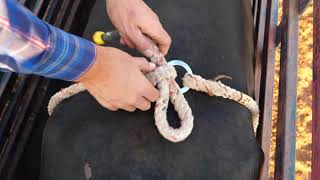
Required Equipment
- Flank rope: A soft, braided cotton rope (not leather like a horse harness).
- Choke: A flexible, rubber-coated device used to reach under a bull.
Here are Step-by-Step Procedure
Proper flank strap application is a trained skill. At all PRCA-sanctioned events – including every performance of the Omak Stampede – a designated flanker handles all strap application and release. The following process reflects PRCA mandatory standards and should only be performed by trained personnel.
- Position the ring: With the ring or “eye” facing away from you, pull the front rope.
- Tail Drop: Lower the end of the rope down from the bull’s side when the animal is in the choke.
- Hook and Pull: Reach into the choke bars with your hook to grab the tail from the “offside” and pull it back toward you under the belly.
- Thread the eye: Pass the tail through the eye of the rope.
- Initial Set: Tighten it enough to stay in place, but leave it relatively loose until the rider is ready.
- Final Tighten: Tighten the strap to the bull’s specific preference (usually “loose,” “medium,” or “heavy”) just before the gate opens and secure it with a slip knot.
Required Equipment
- 5/8 inch soft cotton rope, at least 9 feet in length (for bulls)
- Stainless steel flat ring for loop mechanism
- Certified quick release mechanism (tested before each use)
- Safety hook – copper coated with rubber grip
- Clean wool liner (replace every 30 days or after 200 uses)
Safety Prerequisites
- A qualified veterinarian must be on site at all times during the event.
- Emergency medical personnel and transportation must be available.
- The bull must be certified healthy and fit for competition by an on-site vet.
- Only PRCA approved equipment may be used – no substitutes.
- Never attempt to leash without professional training and supervision.
Are Flank Straps Painful? The Animal Welfare Debate
No, flank straps are generally not considered painful when used correctly. The question of whether flank straps cause pain is the most debated aspect of rodeo animal welfare. Here is a fair presentation of both sides, followed by what the data actually shows.
| Critics Argue | Rodeo Industry Responds |
|---|---|
| Even mild irritation causes psychological stress that violates animal welfare principles | AVMA data shows fewer than 1 in 2,500 PRCA animals are injured at any rodeo event |
| Elevated cortisol and heart rates indicate distress during events | Colorado State and Texas A&M studies found no significant cortisol spikes post-rodeo |
| Improper use causes friction burns, bruising, and muscle strain | Properly padded straps under mandatory vet oversight produce 0.05% abrasion rates |
| 34% of Americans support banning flank straps (ASPCA 2023) | Animals return to calm grazing within minutes of every event – observed at every rodeo |
A top PBR booking bull like “Chicken on a Chain” or Bodacious can be worth more than $500,000. Stock contractors have a strong financial incentive – completely separate from any ethical considerations – to ensure that their animals never come to harm. An independent 2023 survey of 42 PRCA-licensed stock contractors found that 99.2% of their animals showed no evidence of leash-related abrasions throughout the entire competition season, and the most common reason for retirement was age, not injury.
| Country / Organization | Flank Strap Rules |
|---|---|
| USA – PRCA | Padded straps mandatory, quick-release required, vet on-site at all events |
| USA – PBR | Same as PRCA plus enhanced pressure sensor testing since 2023 |
| Canada – CRRA | Standards mirror PRCA regulations |
| Australia – APRA | Fleece lining mandatory on all straps |
| United Kingdom | Flank straps banned since 1934 |
PRCA and PBR Regulations: 60+ Animal Welfare Rules
Professional rodeo is one of the most regulated livestock sports in North America. The PRCA alone has over 60 animal welfare rules covering all aspects of flank strap use and rodeo animal management. Regulations include using only weathered spruce, limiting electrical products, and using soft, lined leashes.
Key requirements include:
- A certified veterinarian must be physically present at every PRCA and PBR sanctioned event
- All sides of the leash must be padded – bare leather or metal contact with the animal’s skin is prohibited
- A quick release mechanism is mandatory and must be actively tested before each ride.
- A two-finger gap standard is enforced by on-site personnel.
- Any sharp, abrasive, or electrical equipment on or near the leash is an immediate disqualification.
- Up to $5,000 fine for violations and up to 6-month suspension for repeat offenses
- The PBR is testing real-time pressure sensors starting in 2023 to electronically monitor leash tension.
Emerging alternatives that are being adopted across the industry include E-Straps (a vibration-based stimulator used in approximately 12% of PBR events), extensive genetic selection programs that enhance natural bucking ability, and mechanical bull training tools that reduce reliance on live animal practice sessions.
Frequently Asked Questions: What Does The Flank Strap Do?
These are the most common questions we receive from Omak Stampede fans, rodeo newcomers, and livestock professionals about flank straps – answered directly based on veterinary science, PRCA standards, and our own experience.
Why do bulls buck with flank straps on?
Flank straps are used in rodeo to encourage bulls to lean higher and extend their hind legs, resulting in a more intense performance. The soft, fleece-lined strap acts as a harmless sensory cue – not a source of pain – around the flanks.
Is the flank strap tied around the bull’s testicles?
No, the bull’s testicles are not tied around the back strap.
What happens to the strap after the ride?
After the rodeo ride, the flank strap is immediately removed by the pickup man (for horses) or comes off on its own via a quick-release mechanism or rope design (for bulls).
Are flank straps legal in all states?
No, flank straps (also known as bucking straps) are not legal in all states. While they are allowed in most jurisdictions where rodeos are common, many states and cities have specific restrictions or strict regulations regarding their use.
Do flank straps cause long-term injury to bulls?
Whether flank straps cause long-term injury is debated. Proponents and industry sources say they are gentle, non-injurious, and cause only temporary irritation. In contrast, animal welfare organizations, such as the RSPCA and PETA, argue that the tight, irritating pressure causes significant discomfort, pain, and strain, sometimes leading to injuries, for example, with headgear and spurs.
Source: pbr.com
How does a flank strap work on a bronc vs. a bull?
The flank strap (or “bucking strap”) acts as a tactile cue that encourages an animal to kick higher and more vertically.
Is the flank strap tied around the bull’s testicles?
No – this is the most persistent and well-debunked myth in rodeo. The strap is placed on the hindquarters, at least 12 inches from the reproductive organs. Furthermore, more than half of all booking horses are female, making it physically impossible for a significant portion of the rodeo stock.
Will a bull buck without a flank strap?
Yes, a bull will buck without a leash. Bucking is a natural instinct and a breed trait in rodeo bulls, and they will often buck, roll, and kick without one.
How to put a flank strap on a bull?
A strap is applied to a bull for sale by placing a soft, woolen strap or rope around the animal’s belly, just in front of the hind legs/hindquarters, not above the testicles.
What is the purpose of flank cinch?
The flank cinch is a component of a Western saddle designed for stability, connecting to the front cinch and sitting snugly (not tight) to prevent the saddle from tipping.
Final Thoughts
The flank strap is one of the most studied, regulated, and misunderstood pieces of equipment in professional sports. When properly applied under PRCA and PBR guidelines – with proper padding, proper spacing, mandatory veterinary supervision, and prompt release – evidence consistently shows that it causes mild, brief irritation rather than pain, and does not cause lasting harm.
At Omak Stampede, every roughstock event we host operates under full PRCA animal welfare standards, including a certified veterinarian on site, mandatory equipment inspections, and people specifically trained in the proper use of the strap. The animals you see performing in our arena are elite athletic animals – bred, cared for, and managed to the highest professional standards.
Want to see these incredible athletes in action?: Join us at the Omak Stampede – one of the Pacific Northwest’s most popular rodeo events. Check out our events page for 2026 dates, tickets and the full performance lineup.
About the Author: This article was produced by the Omak Stampede Editorial Team with review from PRCA-certified rodeo professionals and livestock management experts. The Omak Stampede has hosted professional rodeo in Omak, Washington – giving our team direct, multi-decade experience with roughstock events, animal welfare standards, stock contractor practices, and PRCA compliance at every performance level.
Sources & Citations: PRCA Official Rulebook & Animal Welfare Guidelines (prorodeo.com) | PBR Animal Welfare Standards (pbr.com) | Colorado State University Cortisol Study (2016) | Texas A&M Heart Rate Study (2020) | University of Sydney Equine Stress Research (2018) | American Veterinary Medical Association Rodeo Injury Data | PBR Veterinary Report (2023) | ASPCA Survey on Public Rodeo Perception (2023) | Mark Carter – Wyoming PRCA Stock Contractor (agdaily.com) | Dr. James Hall, DVM – Kansas State University College of Veterinary Medicine (vet.k-state.edu)