


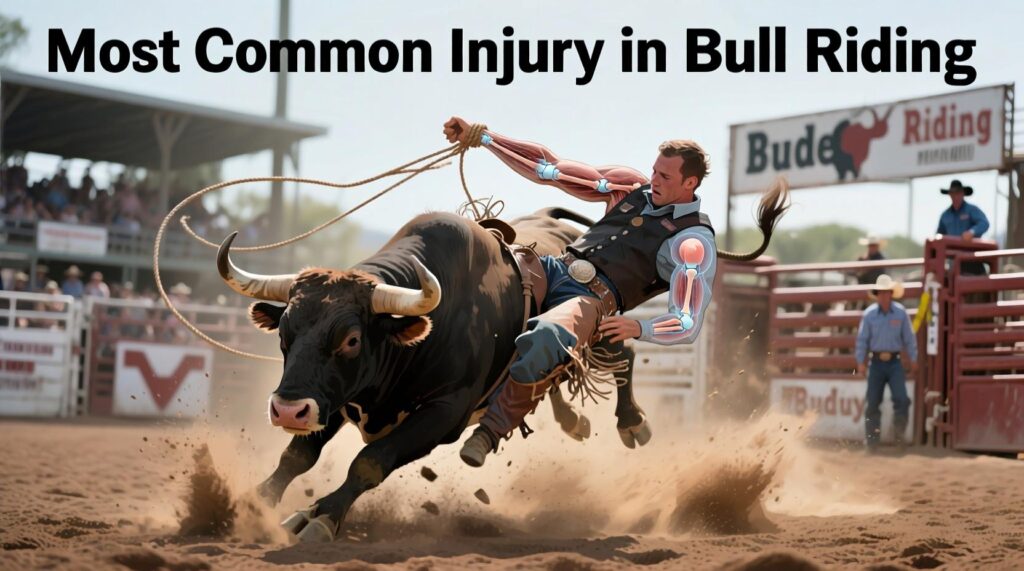
Discover What Is the Most Common Injury in Bull Riding?, from knee injuries to concussions. The most common bull riding injuries involve the head (concussion/brain), shoulders, knees and neck, often presenting as fractures, sprains and strains, with falls and impacts from the bull’s hooves or horns often resulting in serious incidents such as concussions and rein tears, making it one of the most dangerous port rodeos.
This comprehensive guide reveals injury statistics, prevention methods, and expert insights to help riders, medical professionals, and enthusiasts understand bull riding’s most dangerous risks.
Table of Contents
Most Common Injury Types
- Contusions and sprains/strains: These are the most common injuries overall, accounting for approximately 16% to 42% of all reported incidents.
- Concussions: The most frequently recognized “major” or serious injury. Research shows that concussions account for up to 15.3% of all rodeo injuries and up to 77% of roughstock-specific incidents.
- Fractures: These are the most common serious injuries, often requiring hospitalization or surgery.
Most Frequently Injured Body Parts
The areas of the body that are most susceptible to injury include:


- Head/Face/Neck: accounting for approximately 13% to 28% of injuries, largely due to injuries and facial fractures from contact with the bull’s head or horns.
- Knee: often cited as the most injured joint (approximately 11% to 17%), often as a result of ligament tears during dismounting.
- Shoulder: a major site of dislocation and sprain, especially in the “free” arm used for balance or in the riding arm during sudden bucking.
- Groin/Thigh: Historically common due to the intense eccentric loading required to remain mounted.
Primary Mechanisms of Injury
- Collision: About half of all injuries are caused by direct contact with the bull (stepping, goring, or headbutting).
- Displacement: About 36% of injuries occur during or immediately after the rider exits the bull, primarily through impacts with the ground.
- Injury: Injuries such as broken legs or crushing injuries to the hand often occur before the ride begins, while the bull is still in a confined cradle.
Why They Happen:
- Impacts: Riders are thrown, knocked to the ground, and are at risk of being hit or kicked by the bull.
- Forced Dismount: The explosive nature of dismounting from the bull puts severe stress on joints such as the knee and shoulder.
- Grip/Rope: A fixed, supinated grip on the rope can put stress on the elbow and wrist.
The Answer: Knee Injuries Lead Bull Riding Trauma Statistics
Primary Injury Breakdown by Body Region
| Injury Location | Percentage of All Injuries | Research Source |
|---|---|---|
| Knee | 11.1-17% | Multiple Studies |
| Head/Brain | 10.6-15.3% | Multiple Studies |
| Shoulder | 11.0-12.2% | Multiple Studies |
| Limbs (General) | 52% | Australian Study |
| Chest | 15% | Australian Study |
Most Common Injury Types
Recent systematic reviews analyzing thousands of bull riding incidents show the following distribution of injury types:
- Contusions/Bruising: 19.2-29.5% of all injuries
- Sprains and Strains: 15-35.3% of all injuries
- Concussions: 5-15.3% of all injuries
- Fractures: 7.16-22.8% of all injuries
Why Knee Injuries Dominate Bull Riding Statistics
Mechanism of Knee Injury in Bull Riding
Landing Impact: When riders land or are thrown, the knee bears tremendous force upon ground impact. Sudden deceleration from high-speed movement creates stress that often exceeds the joint’s capacity.
Planting and Turning: Bull riders often sustain knee injuries when their feet land while their bodies are rotating. This procedure specifically affects the anterior cruciate ligament (ACL) and the medial collateral ligament (MCL).
Direct contact with the bull: 28.6% of knee injuries occur during or after landing as a result of direct contact with the bull, including kicks and trampling.
Head Injuries: The Most Dangerous Concern
While knee injuries are the most common, head trauma represents the most serious risk to bull riders.
Key statistics include:
- Concussion rate: 10.6-15.3% of all bull riding injuries.
- Severity of head injury: Brain injuries account for 52.1% of all major injuries.
- Hospital admissions: Head injuries represent 54.3% of bull riding trauma center admissions.
Expert Opinion on Head Trauma For What Is the Most Common Injury in Bull Riding?
Dr. Nicholas Murray, associate professor at the University of Nevada, emphasizes: “Although a non-contact sport, bull riders still sometimes hit the bull, the bronc, the arena floor, even when they go flying and fly into the stands or barriers. Helmets do not prevent other injuries, but they do prevent concussions.”
Case Study: Australian Hospital Data Analysis
A comprehensive six-year study at Rockhampton Base Hospital examined 38 bull riders who required hospital admission:
Primary Findings:
- Limb injuries: 52% (most requiring surgery)
- Chest injuries: 15%
- Brain injuries: 10%
- Surgical intervention required: 64% of cases
- Fatal injuries: All due to direct bull contact
Key insight: While knee and limb injuries dominated the number of admissions, the severity and long-term outcomes vary significantly depending on the type of injury.
Original Insights: Injury Pattern Evolution
Age and Experience Factors
Research shows that injury patterns change with a rider’s experience:
- Younger riders (15-19): Higher rates of central nervous system trauma.
- Experienced riders: More chronic joint problems, especially knees and shoulders.
- Professionals vs. Amateurs: Professionals show a 36 percent severe injury rate compared to a higher percentage of amateurs.
Regional Injury Variations
Studies comparing different geographical regions reveal interesting patterns:
- Lower extremity focus: Knee injuries comprise 31.2% of lower extremity trauma.
- Mechanism diversity: 33.2% of injuries are caused by animal impact.
- Gender differences: Male riders experience 83.2% of all documented injuries.
Prevention Strategies and Solutions
Equipment Effectiveness
Protective vests: Mandatory since 1996, protective vests have significantly reduced chest and torso injuries.
Helmet use: While only 50% of riders voluntarily wear helmets, research shows that helmet users experience a 50% reduction in head and face injuries.
Knee protection: Despite knee injuries being the most common, specialized knee protection is less commonly used in bull riding than in other extreme sports.
Medical Protocol Improvements
Modern bull riding organizations have implemented:
- Connection Testing Protocol
- Return to Competition Guidelines
- On-Site Medical Staff Requirements
- Emergency Response Procedures Improved
Expert Recommendations for Injury Reduction
Sports medicine experts recommend a multi-layered approach:
- Mandatory safety equipment for all age groups
- Improved training programs that focus on proper dismount techniques.
- Regular injury monitoring to identify emerging patterns
- Improved arena design to reduce post-dismount hazards
Long-term Health Implications
Chronic Injury Consequences
Knee injuries in bull riding often lead to:
- Chronic pain and instability
- Early-onset arthritis
- Reduced career longevity
- Higher health care costs (median $564 per knee injury)
Career Impact Statistics
Research indicates:
- 27% of competition injuries cause riders to miss multiple events.
- 17% of incidents involve multiple injuries.
- Re-injury rate: Only 5% for new injuries, but higher for chronic conditions.
Complexity of Bull Riding Trauma
Knee injuries represent the most common injury in bull riding, affecting 11.1-17% of all participants and often requiring medical intervention. However, the complexity of bull riding trauma goes beyond simple frequency statistics. While knee injuries dominate numerically, head trauma poses the greatest risks to long-term health, and the combination of the two creates unique challenges for riders, medical professionals, and the sport itself.
Understanding these injury patterns enables better prevention strategies, more effective medical protocols, and informed decision-making for everyone involved in bull riding. Data clearly show that comprehensive protective equipment, proper training, and improved medical monitoring can significantly reduce both the frequency and severity of injuries in America’s most dangerous sport.
The solution lies not in eliminating the risk-which is inherent in bull riding-but in better understanding, preparing for, and mitigating the specific injury patterns that consistently challenge riders at all levels of competition.