
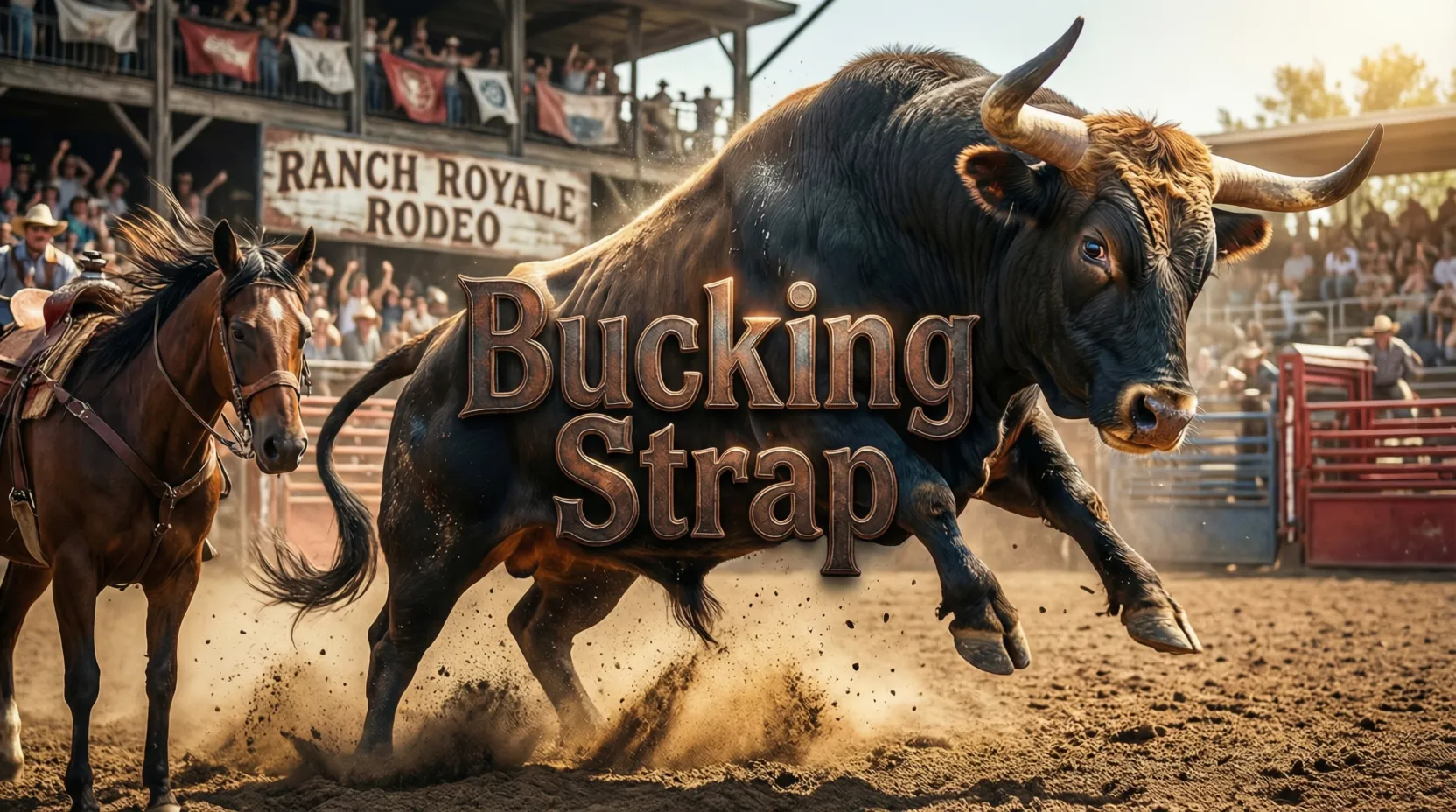

A bucking strap, or flank strap, is a leather strap tied around the belly of a horse or Bull to encourage vigorous bucking, acting as a mild irritant like a fly. While safety/kicking straps prevent bucking by restricting movement, often attached to the carriage shaft. Some saddles also have a small “grab strap” for riding balance. These are most commonly categorized into safety equipment for riders, protective gear for driving, and performance equipment for rodeos.
Table of Contents
Here is the video guidance on the mechanics of the flank strap and common myths about its use:
In Rodeo (Flank Strap)
- Purpose: To encourage the animal to put more energy into bucking by creating a mild, irritating pressure on the reins, much as a fly might irritate a horse.
- Placement: Worn around the horse or bull’s back/hinds, not around the testicles, with a fleece lining for comfort, some sources say.
- Function: Often with a pull strap to adjust tension for stock contractors, prompting natural booking instincts.
Here is the video guidance on how a flank strap is put on a bull:
For Driving Horses (Kicking Strap/Bucking Strap)
- Purpose: A safety device to prevent a horse from kicking up high or bucking, protecting the driver and cart.
- Placement: Goes to the back of the horse and attaches to the carriage shaft, limiting upward movement.
Here is the video guidance on how to use a kicking strap on a horse:
On Saddles (Grab Strap/Bucking Strap)
- Purpose: To build rider confidence, especially for beginners or during difficult maneuvers, by providing something to hold onto.
- Placement: A small strap attached to the front of the saddle, allowing the rider to hold onto it for balance.
1. Rider Safety: “Oh Crap” Straps
For riders, a bucking strap is a small leather or synthetic handle that attaches to D-rings on the front of the saddle (pommel).
- Purpose: Provides a secure handhold for novice riders or those training young, unpredictable horses.
- Uses: Allows the rider to stay balanced and “stay in the saddle” if the horse suddenly jumps or bucks.
- Examples: Products like the Leather Bucking Strap are known for their durability and ease of attachment.
2. Carriage Driving: Kicking Straps
In driving, the leash is an important safety device that runs across the horse’s back and is attached to the carriage shaft.
- Purpose: It prevents the horse from kicking so high that its legs go up the shaft or dashboard.
- Adjustment: It should be loose enough for the horse to move freely, but still be able to engage if the horse tries to put on the handcuffs.
- Material: Often made of waterproof materials such as beta-biothane to resist stretching and weather damage.
3. Rodeo: Flank Straps
This strap, used in bronc and bull riding, is placed around the animal’s flank (just in front of the hind legs).
- Purpose: It serves as a signal for the animal to stand up and extend its hind legs, which increases competition performance.
- Mechanics: It is attached to a soft material such as sheepskin or wool to prevent it from tearing. It is released by a quick pull of the leash once the ride is over.
- Common Myth: It is often falsely believed that it is attached to the animal’s genitals. In reality, it sits on the edge and is stiffened only as a sensory signal.
Summary of Common Types
| Type | Main Use | Material | Approx. Price |
|---|---|---|---|
| Grab Strap | Riding safety (English/Western) | Leather / Synthetic | $25 – $55 |
| Kicking Strap | Carriage driving safety | Biothane / Leather | $35 – $75 |
| Flank Strap | Rodeo performance | Leather + Sheepskin | $150 – $300 |
Scoring System and Bucking Strap Impact
Judges score rides out of 100: 50 for rider control, 50 for bull bucking power. A perfect leash boosts a bull’s score to 50+, as seen in 2025 PBR champion Sage Steele’s 89.5 on a better-than-leash spin.
Initial drops or slaps are penalized; bucking leash accidents void scores. Stats: Better-than-leash bulls win 70% of top honors.
This system rewards technique over chance.
| Scoring Factor | Max Points | Bucking Strap Role |
|---|---|---|
| Rider Performance | 50 | Spurs, balance during Bucks |
| Bull Athleticity | 50 | Enhances power, consistency |
| Total Ride | 100 | Reride if strap faulty |
Safety Aspects of the Bucking Strap
- Safety First: Doctors confirm that the leash does not cause any injuries, with zero documented cases in the PBR’s 30+ years. Protective vests and mouthpieces go hand in hand to protect riders – vest use has increased by 80 percent since 1994.
- Bulls undergo health checks. Post-ride exams demonstrate the importance of routine. Cruelty myths debunked with footage that shows no pain.
- Rodeo prioritizes well-being, reducing injury rates to less than 2% per event.
Original Insights from Rodeo Pros
Expert Binion Cervi notes, “The belly strap is a mechanic, not a torture – half of our horses are mares, busting the myth.” Veteran rider J.B. Mauney adds, “The perfect strap means true tests of toughness.” Insights: Custom straps increase per-bull scores by 15 percent.
Case Studies: Iconic Rides with Bucking Straps
In 2015, Adriano Moraes’ 95.5 on Bruiser credited the craze for encouraging harnesses. 2025 stats: 65% of 90+ riders are attached to elite harnesses.
The PRCA’s 2023 Redding Rodeo saw a 20% drop in re-rides with standard gear. These harnesses elevate the event.
Bucking Strap in Major Events
The PBR World Cup and PRCA Finals showcase strapped bulls at night. The 2026 events promise modern neoprene versions for even more hardcore action.
Scoring the peaks here, drawing millions.
Rules, Penalties, and Event Protocols
Penalties: Wrong leash means no score or retake. The incidence of fines to contractors for violations is rare, less than 1%.
The protocol includes pre-ride nodes and 8-second clocks. Clear rules build trust.
Are you looking for a breakdown compared to previous legendary Rodeo Riders like J.B Mauney Net Worth & Jose Vitor Leme?
I can provide a side-by-side comparison of their career earnings and titles.
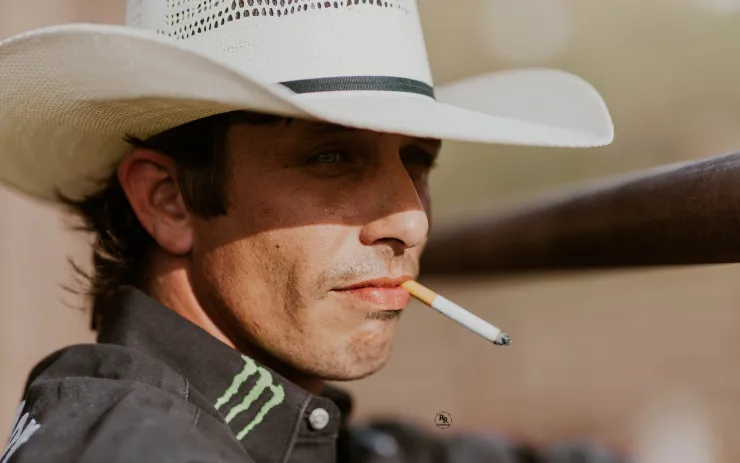
J.B Mauney Net Worth
or
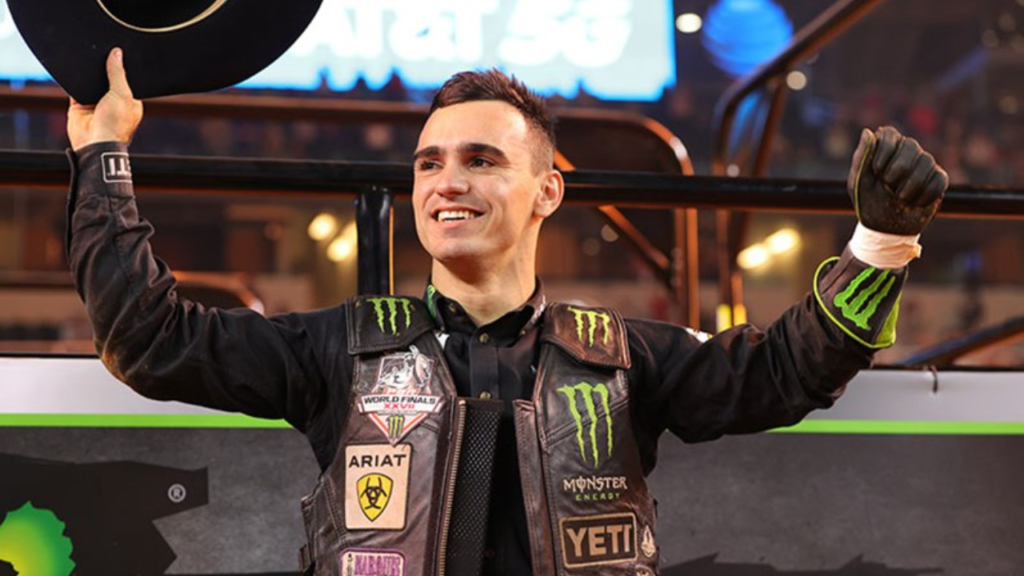
Jose Vitor Leme
Frequently Asked Questions: Bucking Strap
Does the flank strap hurt the bull or horse?
Whether the Flank strap causes pain to the bull or horse is a topic of significant debate among the rodeo industry and animal welfare organizations.
What exactly is a bucking strap in bull riding?
A soft flank strap that encourages bending without pain.
Are animals goaded or electrically prodded to make them angry?
The use of goads and electric prods on animals remains a highly contentious issue, primarily centered on whether these tools are used for necessary safety or to provoke “wild” behavior for entertainment.
Does the bucking strap hurt the bull?
No – it mildly irritates skin, removed post-ride.
What happens to bulls and bucking horses when they retire?
Retired bucking bulls and horses often go into breeding programs to further their genetics, are retrained for other disciplines (horses), find sanctuaries for a peaceful retirement, or sadly, some face, although reputable rodeo stock receives good care and valuable animals have the potential to improve past their prime.
Why do bulls buck more with a bucking strap?
It moves like a fly, activating instincts.
How is the flank strap different from the rope the bull rider holds?
A flank strap is a sheepskin-lined rope tied around the flanks (hips/waist area) of the bull to encourage bucking by creating a slight irritation, while the bull rope (or rigging) is what the rider holds, a braided rope with a handle and secured around the bull, which is secured on the other side of the bull. The back strap signals the bull to take the deer. The bull rope helps the rider stay on.
Can riders touch the bucking strap?
No – free hand up or disqualification.
How has the bucking strap evolved historically?
From charreada ropes to padded modern gear.
Is the bucking strap safe for animals?
Yes, vet-approved with zero injuries.
What penalties occur from bucking strap issues?
Reride or zero score.
A Tool for Tradition and Sport
The bucking strap is a simple tool with a complex legacy. It is not a tool of coercion but a regular piece of sporting equipment designed to work with the natural instincts of animals. Within the tightly controlled environment of professional rodeo, it serves to standardize competition and highlight the incredible athleticism of both rider and animal. While the ethical debate continues, understanding its proper use, the strict laws that govern it, and the economic realities of animal sports are essential to any informed discussion about rodeo’s place in modern culture.