
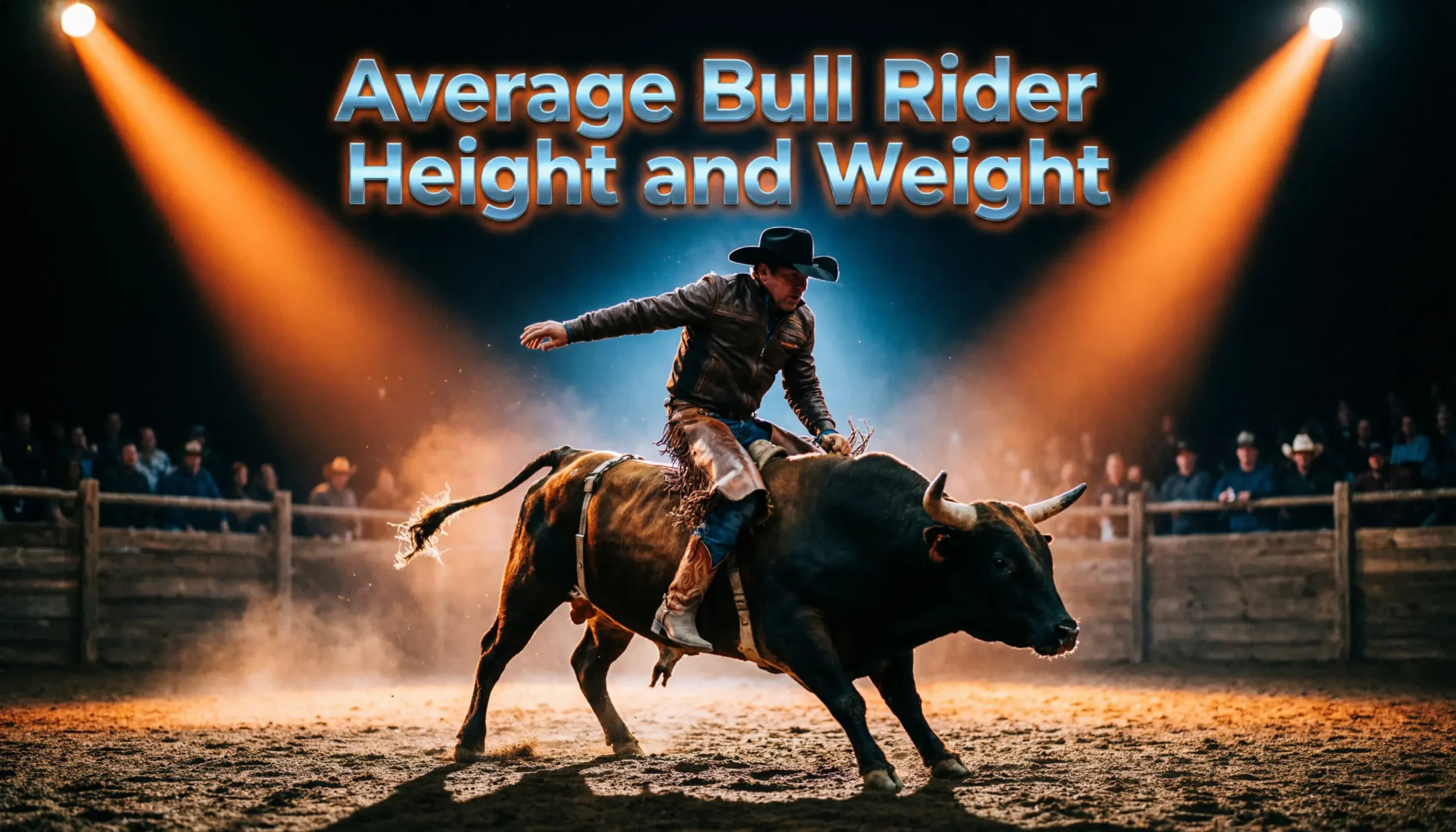
Average Bull Rider Height and Weight, In professional bull riding, there is no official height or weight requirement, but the physical demands of the sport favor a specific build. The average professional bull rider is typically 5’7″ to 5’9” tall and weighs between 140 and 160 pounds. Studies of top PBR riders have shown an average height of 68.5 inches (about 5’8″) and a weight of 151.5 pounds. A smaller, lighter build is generally preferred for balance, although riders can range from 5’5″ to 6’0″.
Table of Contents
Important details regarding the bull rider, and the bull, physicality:
- Ideal Build: The ideal, typical range for professional bull riders is approximately 5’5″ to 5’10” and 130-160 lbs.
- Physique and Success: While shorter, lighter riders are common, studies have not shown a significant correlation between a rider’s height/weight and their success (e.g., 90-point rides).
- Weight Management: Although there is no official weight limit for riders in most competitions, riders generally aim to stay under 200 lbs, with many performing well under that.
- Bull Weight: Bulls typically weigh between 1,700 and 1,800 lbs.
Average Statistics
- Height: The average height of a professional bull rider is approximately 5′ 8.5″. While most top riders fall between 5′ 5″ and 5’9″, some successful athletes are as tall as 6′ 0“.
- Weight: The average weight is approximately 150-160 lbs. Professional riders typically stay within the 140-170 lb range to maintain a high strength-to-weight ratio.
Physical Advantages
- Center of Gravity: Shorter riders are often preferred because the lower center of gravity makes it easier to stay balanced and focused on the bucking bull.
- Agility vs. Strength: While taller or heavier individuals can ride, they often have to work harder to move their feet and stay in position than their shorter counterparts.
- Relative Size: For perspective, the average Professional Bull Riders (PBR) bull weighs around 1,700-1,800 lbs, meaning the animal is typically 10 to 12 times heavier than the rider.
| Rider | Height | Weight | Achievement |
|---|---|---|---|
| J.B. Mauney | 5′ 10″ | 140 lbs | 2-time PBR World Champion |
| John Crimber | 5′ 6.9″ | 141 lbs | Top PBR Contender |
| Ky Hamilton | 6′ 0″ | 145 lbs | Tall professional rider |
| Kaique Pacheco | 5′ 8″ | 145 lbs | PBR World Champion |
Why Height and Weight Matter
Bull riders prioritize agility over size. A lower center of gravity helps them match the bulls’ explosive turns and kicks, which prevents them from falling quickly. Riders taller than 6 feet face challenges, as seen in forums where 5’11”, 200-pound aspirants are looking to lose up to 160 pounds.
Data from the top 50 PBR riders confirms this: average height 68.54 inches (5’8.5”), weight 151.56 pounds. Brazilians and Americans are ahead, but physique predicts success less than riding volume.
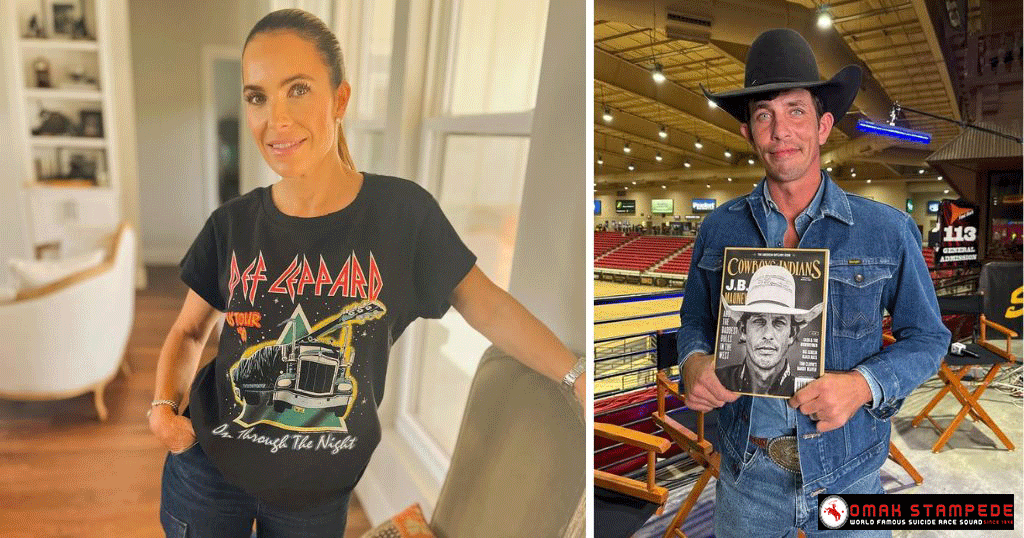
Are you looking for a breakdown compared to previous legendary Rodeo Riders like Samantha Lyne Mauney? & JB Mauney Net Worth?
I can provide a side-by-side comparison of their career earnings and titles.
or
Frequently Asked Questions: Average Bull Rider Height and Weight
What is the average height of a bull rider?
The average height of a bull rider is 5 feet 8.5 inches, based on an analysis of the PBR’s top competitors.
Do taller riders succeed?
Yes, tall riders can and do succeed in various areas of riding, although they often face different physical and logistical challenges than shorter riders. Success for tall individuals often relies on taking advantage of advantages such as greater power output and adapting to obstacles such as increased frontal area.
Can tall people be bull riders?
Yes, tall people can absolutely be bull riders, although shorter, lighter individuals (around 5’6″) are more common due to their lower center of gravity. While greater height makes it harder to control body weight and balance, taller riders like Tanner Byrne (6’4″) and Beau Hill (6’2″) have found success by focusing on muscular strength.
Is bull riding the most dangerous sport?
Bull riding is widely considered one of the most dangerous, if not the most dangerous, organized sports, often referred to as “the most dangerous eight seconds in sports.” With a significantly higher injury rate than sports like football, riders face greater risks of concussions, fractures, and trampling from the 1,700-pound animals.
How does weight affect scoring?
In bull riding, the rider’s body weight is not a direct scoring metric, but it significantly affects the performance factors that judges evaluate. Scoring is a subjective evaluation of both the rider and the bull, with a total of 100 points.
Does the flank strap hurt the bull?
The Flank strap does not hurt the bull and is not tied around the testicles. It is a soft cotton or fleece-lined rope that is placed around the hindquarters (in front of the hind legs) to act as a foreign object to encourage bucking, as in a “tickling” or uncomfortable sensation that makes them want to kick.
Why eight seconds?
In bull riding, the “eight-second” rule is a standard established in the mid-1900s to create a fair, competitive, and safe scoring system. It represents a balance between the maximum intensity of the bull’s bucking, which usually peaks before tapering off, and the physical capacity of the rider to endure such force.
What’s the worst bull riding injury?
In bull riding, the “worst” injury is often debated between those that were fatal and those that resulted in permanent paralysis. Some of the most infamous incidents in the history of the sport involve legendary riders and infamous bulls:
Do heavier riders have an advantage?
Heavier riders have a significant advantage on flat terrain and fast descents, while lighter riders generally dominate on steep climbs. Whether being heavier is an “advantage” depends entirely on the specific terrain and whether that weight comes from active muscle or passive mass.
Bull riding Injury rates by size
Bull riding has the highest injury rate in professional rodeo, with approximately 48.2 injuries per 1,000 competitors exposed. Common injuries to the shoulders, knees, and head are most often caused by falls, with 44 percent of central nervous system injuries involving children, who are particularly vulnerable.
PBR vs. PRCA Averages
Based on 2025 data, Professional Bull Riders (PBR) events feature slightly higher-than-average scores for top riders due to the consistently high potential of booking bulls (often 90+ point potential), while Professional Rodeo Cowboys Association (PRCA) events feature a higher volume of events and a widespread lead light to reduce bulls. Average but higher riding percentages for top competitors.
For aspiring riders, the message is clear: Focus on technique, build core strength, and climb as many bulls as possible. Your height and weight are only where you start – not what determines how far you will go.