


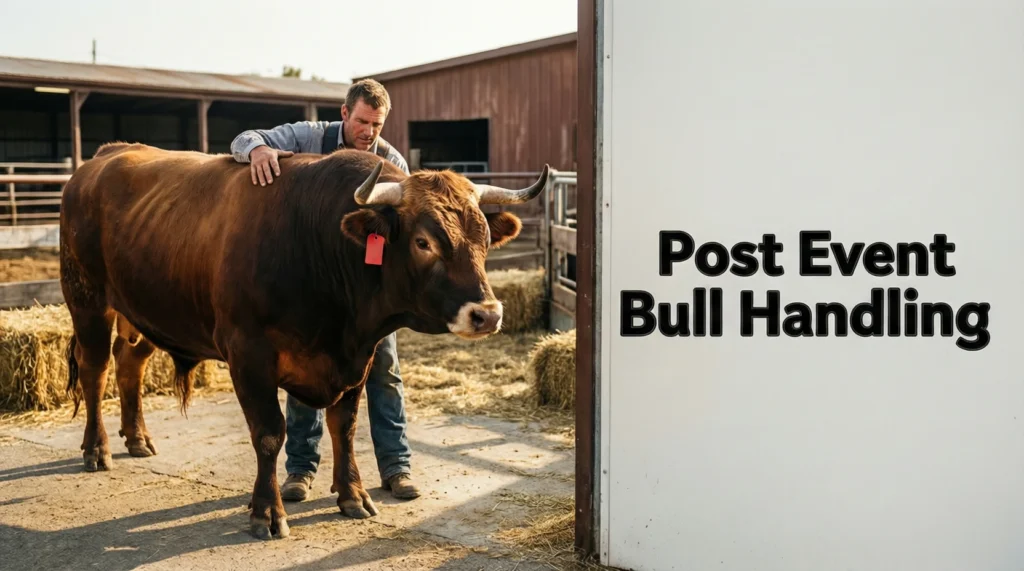
Post Event Bull Handling focuses on rest, recovery, and health assessments, including checking for injury, lameness, and malnutrition, often with a 2-3 week quarantine period for observation and rehydration. Key steps include providing high-quality feed, treating parasites, and ensuring appropriate, low-stress handling techniques so they can settle into their new, or returning, environment.
Table of Contents
1. Immediate Health & Physical Assessment
There is a critical window for identifying post-season or post-competition injuries that can lead to permanent infertility or chronic lameness.
- Physical Checklist: Examine the lower abdomen for swelling around the sheath and testicles. Check for ulcers, cuts, or scarring of the penis from a tough breeding season.
- Lameness Check: Pay attention to the feet and legs. Note that 90% of lameness occurs in the feet.
- Fertility Recovery: If significant injuries are found, allow a few weeks for recovery before performing a semen check to determine if the bull should be culled or kept for next year.
- Separation and Housing: Separate young, growing bulls from mature bulls, especially in winter. Use secure, sturdy fencing as bulls can be more aggressive.
- Biosecurity and testing: Conduct breeding soundness evaluations (BSE) before the next season and test for diseases such as trichomoniasis.
- Handling safety: Move bulls quietly to avoid injury, as they may become more aggressive or stressed.
2. Nutritional Recovery
Bulls can lose 100 to 200 lbs during an active breeding season. Recovery can take 4 to 8 months.
- Nutritional Requirements: Move bulls to a separate pasture containing high-quality roughage (8-10% protein).
- Young Bulls: Bulls under 36 months of age are still growing and require a ration designed to provide 1.5 to 2 lbs per day to restore breeding weight and support growth.
3. Low-Stress Handling & Movement
Excited or fearful bulls take 20 to 30 minutes to calm down once agitated.
- Flight Zone Management: Work on the edge of the flight zone at a 45- to 60-degree angle behind the shoulder to move them quietly.
- Social Dynamics: When moving a group of bulls, be aware that fighting is a major problem. Give them time to work out their social order before forcing them through tight chutes.
- Safety Protocols: Never handle a bull alone. If a bull becomes aggressive, never turn your back and utilize a vehicle (ute or tractor) for protection rather than moving on foot.
4. Facility Safety
- Emergency Exits: Handling pens should have main gates or emergency exits so handlers can escape if bulls charge.
- Removing Distractions: Clear the aisles of trash, shadows, or fluttering objects, as bulls have poor depth perception and are easily spooked by new visual objects.
5. Indicators of Stress/Agitation
- Increased heart rate: Takes 20 minutes to return to normal.
- Aggression: Pawing the ground, lunging, or trying to jump fences.
- Voicing: Excessive noise in a crib can indicate discomfort or stress.
6. Post-Breeding Management
- For bulls returning from breeding, ensure that they are checked for injuries and given a recovery period, especially for bulls under 36 months of age.
- Vaccinations may be required for routine health treatments, such as vibriosis or leptospirosis.
Beyond the Arena: Transportation and Long-Term Care
The care of the bull continues long after the crowd has gone home.
- Transportation: Bulls are transported in specially designed, climate-controlled trailers that minimize the risk of stress and injury. As with all livestock transportation, officials must verify before any trip that the animal is “fit for transport.” Drivers are trained to transport these precious animals with the utmost care.
- Life as an athlete: Top bucking bulls command six-figure salaries and are treated like elite athletes. They live on spacious ranches, receive premium nutrition, and have plenty of room to roam and recover between events. Their competitive careers are carefully managed to prevent overwork.
- Retirement: When a bull’s bucking career is over, it typically retires to its home ranch as a breeding animal, passing on its valuable genetics. These animals often live long lives, being cared for, due to their high value and the bond they form with their stock contractors.
Are you looking for a breakdown compared to previous legendary Rodeo Riders like Rocker Steiner Net Worth & How Many Bull Riders Die A Year?
I can provide a side-by-side comparison of their career earnings and titles.

Rocker Steiner Net Worth
or


Jose Vitor Net Worth
Frequently Asked Questions: Post Event Bull Handling
What happens if a bull gets injured during an event?
If a bull is injured during an event, it is usually immediately evaluated by an on-site or on-call veterinarian, with care ranging from rest and treatment of minor injuries to, in severe cases, euthanasia. While stock contractors aim to protect their valuable animals, there are concerns in some places regarding the adequacy of emergency response.
How often do bulls compete?
In professional competitions such as the PBR (Professional Bull Riders), booking bulls typically compete every few weeks, but their schedule depends largely on performance, rest needs, and the duration of the event. Elite bulls typically compete once during a weekend event, with their competition frequency carefully adjusted to ensure they have adequate rest.
Who is responsible for the bulls after the rodeo?
Stock contractors are primarily responsible for the care, health, and transportation of the bulls after the rodeo, ensuring they are returned to the pen, fed, and supervised. These specialized contractors often treat these high-value animal athletes like family, managing their comfort, food, and animal care between performances.
Can bucking bulls be aggressive in their pens?
Yes, bucking bulls can be extremely aggressive and territorial in their pens, posing significant risks to handlers. While they are not inherently “mean” by nature, the stress of travel, isolation, and handling can trigger territorial, defensive, or aggressive behaviors, including charging, pinning, or fighting.
A Discipline of Respect and Skill
After the event, bull handling is a sophisticated blend of skill, animal science, and an unwavering respect for raw power. It’s a discipline where the safety of both human and animal depends on rigorous training, calm execution, and a deep understanding of bovine behavior. For the rodeo industry, mastering this unseen, off-stage choreography is as essential to the integrity and future of the sport as the heart-stopping eight-second ride itself. It ensures that the animal athletes at the heart of this tradition are professionally managed, with the demands of their strength and the right to their roles.