


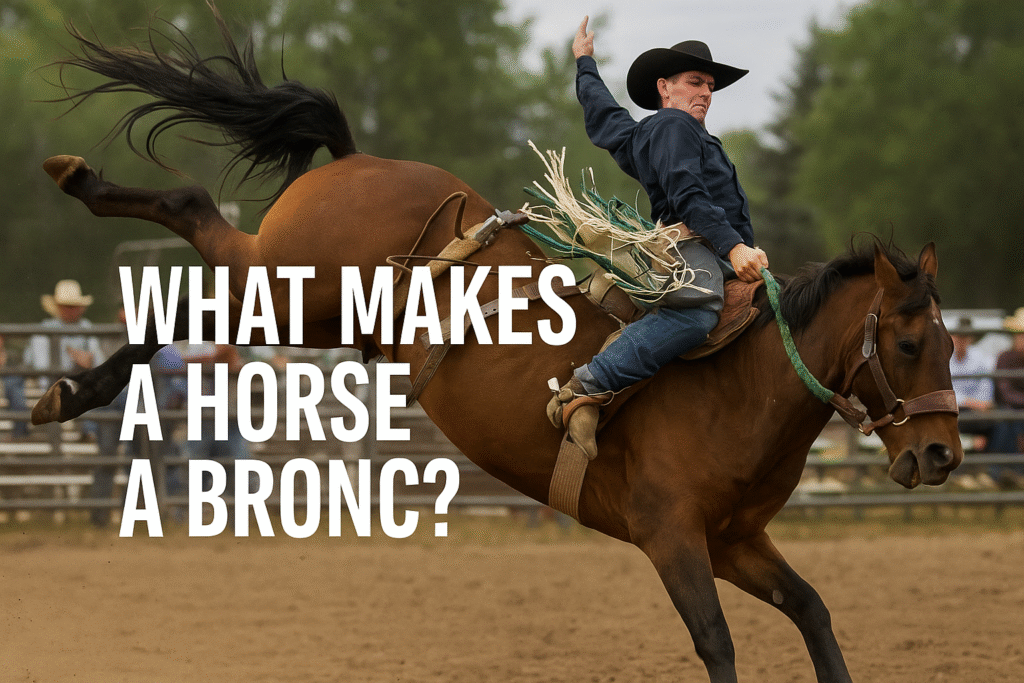
What Makes A Horse A Bronc? A bronco, or “bronc,” is a horse – usually bred specifically for rodeo – characterized by its natural, powerful bucking, galloping, and jumping behavior designed to dislodge the rider. Derived from the Spanish word for “rough,” these horses are rarely truly wild today, but are often raised in semi-feral, herd conditions to maintain their high-spirited, athletic nature.
In the world of rodeo, a horse becomes a “bronco” (short for the Spanish bronco, meaning rough or rugged) through a combination of special breeding, natural instincts, and specific equipment.
Broncos are not a specific breed but rather equestrian athletes who have a powerful, natural instinct to compete explosively. As the backbone of rodeo’s most iconic events – saddle bronc and bareback riding – broncs electrify crowds with their untamed energy, high-flying bucks, and relentless spirit.
Table of Contents
Key factors that make a horse a bronco include:
- Selective breeding: Modern rodeo broncs are specifically bred from bloodlines that exhibit exceptional bucking ability, agility, and strength, rather than being simply “wild.”
- Natural instincts: While they can be handled, these horses have a strong, natural inclination toward bucking, which is encouraged in rodeo events such as saddle bronc and bareback riding.
- Physical traits: They are often stocky, muscular, and slightly short in stature, which allows them to turn quickly and lean hard.
- Behavioral traits: A true bronc is known for its “rough” demeanor, intense energy, and refusal to break or be easily tamed.
Here are the main factors that make a horse bronc:
Specialized Breeding and Genetics
Modern Broncos are rarely “wild” horses. They are elite athletes bred specifically for their strength, agility, and “desire.”
- Bloodlines: Professional stock contractors use established lineages of proven bucking mares and stallions to produce offspring with high-energy temperaments.
- Draft crosses: Many saddle broncs are crosses between draft horses (for strength and size) and “warm-blooded” breeds such as Thoroughbreds or Quarter Horses (for speed and athleticism).
- Selection: Horses are tested with weighted dummies at a young age. Those that demonstrate a natural ability for powerful, rhythmic bucking are kept as rough stock, while others may be trained for various farm jobs.
Natural Instincts
Bucking is a natural defense mechanism that all horses have to protect themselves from predators.
- “Outlaw” Spirit: Some horses are simply “level” – they have a natural resistance to being handled or ridden and prefer to be untamed.
- Play and Energy: In non-rodeo settings, horses may buck due to excitement (“feeling fresh“), fear, or physical discomfort.
The Flank Strap
While genetics provide the ability, the flank strap is the signal that tells the broun it is “time to work.”
- Function: This fleece-lined leather strap is tied around the horse’s withers (the sensitive area just in front of the hind legs).
- Effect: It neither hurts nor touches the horse’s limbs. Instead, it acts as a tactile signal that encourages the horse to “throw away” the sensation by kicking its hind legs straight and high.
- Release: Once the ride is over and the rider is safely out, the handlers release the strap, and the horse usually stops bucking immediately and returns to the gate.
Training and Conditioning
Rodeo Broncos are professional athletes who live a “pampered” life on ranches when not competing.
- Conditioning: They are trained through “push and release” to understand that the harder they bend, the quicker the rider and back strap are removed.
- Maturity: Most Broncos are not entered into professional competition until they are 6 or 7 years old to ensure they have the physical stability for the sport.
Defining a Bronc: More Than Just a Bucking Horse
The bronc (or bronco) is defined by its continuous, high-intensity bucking action, making it unsuitable for traditional riding disciplines. Key features include:
- Innet Bucking Instinct: The natural tendency to buck riders through coordinated jumps, spins and kicks.
- Special Uses: Used exclusively in professional rodeo events such as bearback and saddle bronc riding.
- Scoring Potential: Judges rate booking technique (up to 50 points) based on vertical height, intensity of kick, and changes of direction.
Origins: How Horses Become Broncs
Two primary paths create rodeo broncs:
A. “Outlaws” from Other Disciplines (40%)
Horses were rejected from racing, farming, or riding careers due to uncontrolled booking. Examples:
- Classic Velvet: A Quarter Horse failed to pull a team rope and cart before becoming the 1981 “Bearback Horse of the Year.”
- Khadafy Skoal: Fired for stopping handlers from Wyoming ranching.
B. Purpose-Bred Buckers (60%)
Top stock contractors use precision breeding to amplify natural bucking instincts, creating horses genetically wired for rodeo performance.
- Behind every great bronc is a carefully planned bloodline. Approximately 40 PRCA-registered breeding programs, including Sankey Rodeo’s famed ‘Born to Buck’ initiative, specialize in developing horses with world-class bucking genetics.
- Genetic success rate: 85% of the offspring of stallions like Custer become professional horses.
- Bloodlines: The offspring of legendary bucks (e.g., Bobby Joe Squall) dominate events such as the National Finals Rodeo.
Bronc Physiology: Built to Buck
Physical traits optimize bucking performance:
- Muscular structure: Powerful buttocks and shoulders create explosive jumps.
- Size Variations:
- Bareback Bronc: Small (1,000–1,200 lbs), agile, with unpredictable movement.
- Saddle Broncs: Large (1,200–1,500 lbs), often produce draft crosses, rhythmic, high arching bucks.
- Conformation: Strong back and legs withstand repeated high-impact landings.
Behavioral traits include high reactivity, low tolerance for restraint, and strong self-preservation instincts when pressured.
Training and Care: Debunking Myths
Animal Welfare Practices
- Flank Straps: Soft fleece/neoprene bands provide painless buckling. Studies show no tissue damage or behavioral discomfort.
- Injury Rate: The PRCA reports an injury rate of only 0.047% (5 out of 10,000 shows).
- Longevity: Many compete in their 20s (for example, high tide at age 32) and retire to pastures.
Flock Management For What Makes A Horse A Bronc?
- Social Housing: Housed in mixed-sex flocks to reduce stress.
- Workload: Book 1-2 times per week for <1 minute per run, minimal stress.
Broncs vs. Regular Horses: Key Differences
Table: Bronc Traits vs. Typical Riding Horses
| Trait | Bronc Horse | Regular Riding Horse |
|---|---|---|
| Primary Instinct | Buck explosively | Accept riders/direction |
| Training Response | Resists saddling/control | Yields to cues |
| Career Path | Rodeo events only | Riding, racing, therapy, etc. |
| Genetics | Bred for bucking or “outlaw” | Bred for calmness/versatility |
| Physical Build | Heavy musculature; varies by type | Discipline-specific builds |
Ethical Considerations
The PRCA implements 60+ welfare laws, including:
- Veterinarians on site at all events for the What Makes A Horse A Bronc?
- Electrical products banned (except low voltage safety devices).
- Spurs must have free-rolling rolls to avoid injury.
- Retired Broncos often live 20+ years after their careers, reflecting lifelong standards of care.
FAQs: What Makes A Horse A Bronc?
Q: Can any horse become a bronc?
A: No – only those born with booking genetics or irreversible “illegal” behavior.
Q: Do broncs enjoy bucking?
“They buck because they like it … You can see it in their eyes.”
– Jim Gay, Fort Worth Rodeo Producer
Q: Are stallions used in rodeos?
A: Rarely. Geldings and mares are preferred for herd compatibility.
Q: What is bronc?
A bronc is a horse that is wild, untrained, or has a natural tendency to buck. The term is heavily associated with western North American culture and rodeo.
The Heart of Rodeo
Bronco are equine specialists who combine unique genetics, physique and instinct. Their care is governed by strict welfare protocols, ensuring they are respected athletes in a venerable American sport. As stock contractor Colin Pickett notes: “They were born to buck” – a testament to their unwavering passion.