
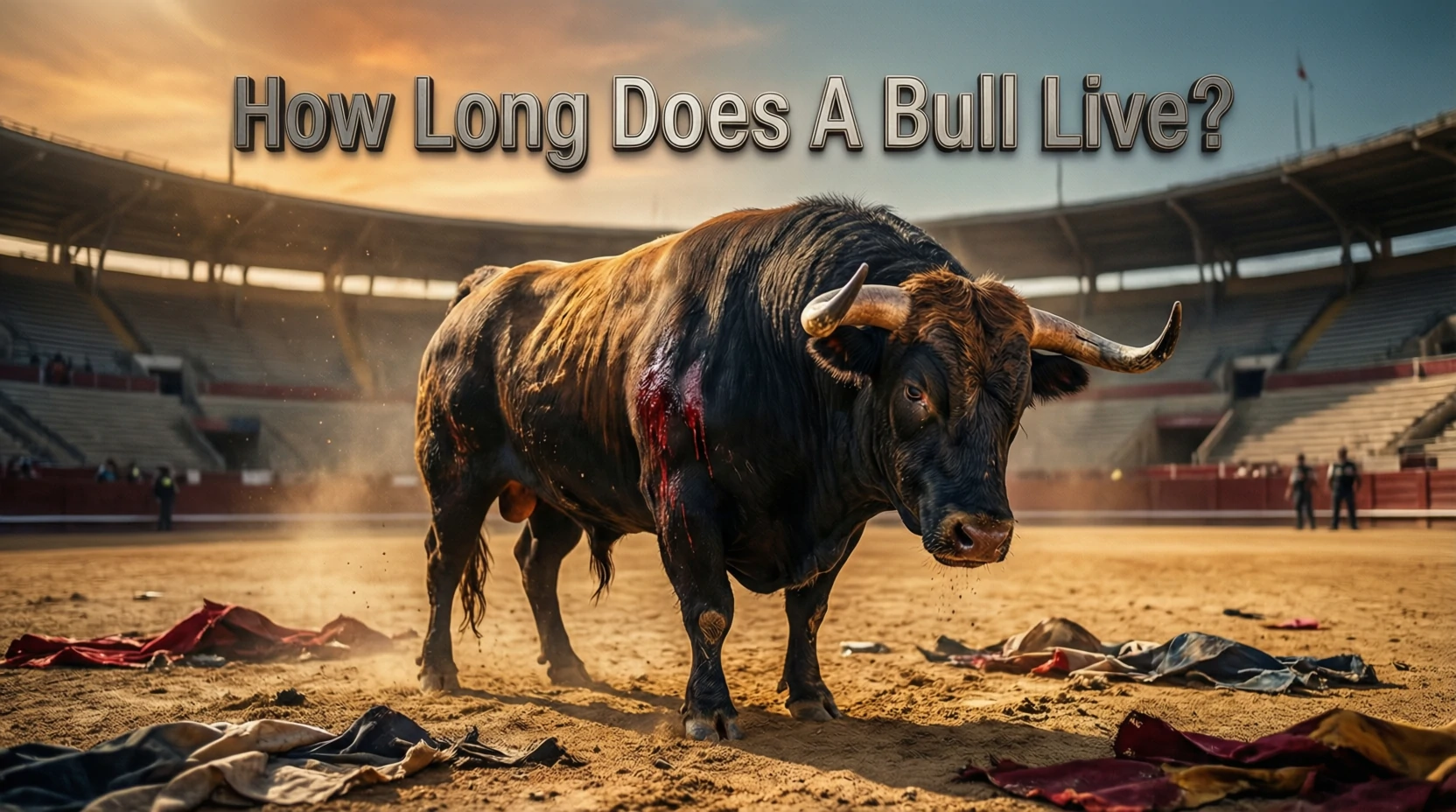

How Long Does A Bull Live? Bulls naturally live 15-20 years. PBR bucking bulls often live 10-15+ years due to elite care. Beef cattle are typically slaughtered at 18-24 months. Breeding bulls are typically retired at 4-5 years due to declining fertility or structural health issues.
Table of Contents
Lifespan of Bulls Career
The lifespan of a bull varies based on environment, diet, and management practices.
| Type of Bull | Typical Lifespan | Key Reasons |
|---|---|---|
| Natural / Pasture Bull | 15 – 25 years | Low stress, forage diet, no commercial pressure |
| Commercial Breeding Bull | 4 – 5 years active | Culled when fertility or structure declines |
| Beef Cattle Bull | Most are slaughtered at 18 to 24 months | Intensively raised bulls can be slaughtered as early as 12 to 15 months. |
| PBR Bucking Bull | 10 –15+ years | Elite Veterinary Care, competes for just a few minutes each year. |
| Sanctuary Animals | 20+ years. | Bulls in sanctuaries often reach their full natural lifespan of 20+ years. |
Research in animal science shows that nutrition, disease prevention, and stress management significantly affect lifespan of bull.
Sources: University of Nebraska–Lincoln Extension – Beef Cattle Management , Oklahoma State University Extension – Cattle Production & Lifespan
How Long Do PBR Bulls Live?
PBR (Professional Bull Riders) Bucking Bulls typically live well into their teens, often reaching 15-20 years of age, with their competitive careers lasting about 7-8 years. While they peak at 5-6 years of age, many compete until they are 10-13 years old, after which they often move to breeding farms.
Watch Video: What is the Lifespan of a Bucking Bull?

The PBR has had formal animal welfare protocols in place since 1992, including on-site veterinarians at every event, mandatory pre-ride and post-ride inspections, and retirement procedures for bulls that show any signs of injury or distress.
Two of the most famous examples of PBR bull longevity:
- Bodacious – Widely considered the most dangerous bull in PBR history, Bodacious retired from competition at the age of 8. He lived until the age of 16, spending his retirement years peacefully on a Missouri ranch, continuing a breeding streak.
- Bushwacker – Considered the greatest bull ever to have been bred in the PBR, Bushwacker competed until the age of 10 and retired from Powder River Cattle Company in Wyoming, where he spent his years as a celebrity attraction.
Both animals demonstrate that with proper nutrition, veterinary supervision, and low-stress management, a bucking bull’s working career does not significantly shorten its overall lifespan.
6 Key Factors That Affect a Bull’s Lifespan
No two bulls age the same. The following six factors have the greatest impact on how long a bull lives – and understanding them is essential for anyone who manages cattle or is simply curious about bovine biology.
1. Genetics and Breed
Genetics determine the inherent structural stability, disease resistance, and potential longevity of a vine.
- Breed differences: Some breeds are known for their longer lifespans, while others may have shorter productive lives.
- Structural correctness: A genetic predisposition for strong feet and legs is very important. Poor conformation (for example, weak hooves or poor leg structure) often leads to unintentional culling, as the bull cannot easily move on to breeding.
- Adaptation: Genetics determine how well a bull survives in its specific environment (for example, heat tolerance in hot climates).
2. Nutrition and Diet
Nutrition and diet are important factors affecting the longevity and productive life of bulls, affecting fertility, semen quality, and structural health. Proper diet management prevents undernutrition (which delays puberty) and overnutrition (which leads to excess fat, low libido, and heat stress on the testicles), both of which can shorten a bull’s breeding life.
Mature bulls require a balanced diet, typically around 2% of their body weight in dry matter per day, to maintain body mass and energy levels.
3. Structural and Foot Health
Structural and foot health is a significant, often highly ranked factor in determining a bull’s longevity and working life. Foot problems, joint degeneration, and poor leg structure make it physically difficult for a bull to mount a cow, travel over rough terrain, or maintain body weight or foot problems directly lead to lameness, reduced mobility, and premature death. Annual breeding soundness exams (BSEs), which assess reproductive ability as well as locomotion, are the most important diagnostic tool for catching structural deficiencies early.
4. Reproductive Performance
Reproductive performance is a key factor in the longevity and economic value of a bull. Bulls with poor reproductive performance are usually culled, regardless of their age, while bulls with high performance are often kept longer.
The main aspects of reproductive performance that affect bull lifespan are:
- Breeding Soundness Evaluation (BSE) Results: Annual BSEs identify bulls with inadequate semen quality, poor sperm morphology (normal shape) or low motility. Bulls that fail to meet minimum standards – such as 70% morphologically normal sperm and 30% progressive motility – are often culled, reducing their productive lifespan.
- Semen Quality and Quantity: Testicular size, often measured by scrotal circumference, is a reliable indicator of sperm-producing tissue and semen quality. Bulls with small testicles or those experiencing atrophy (detected by a soft consistency) are culled due to low fertility.
- Libido and Mating Ability: Libido, or sex drive, is very important for a bull to perform, especially in high-density or competitive conditions. A bull with low libido or a physical disability to mate – due to lameness, injury, or extreme straightening of the hind legs – will not mate enough cows and is quickly removed from the herd.
- Reproductive diseases: Menstrual diseases such as campylobacteriosis (Vibrio) and trichomoniasis can cause low pregnancy rates and miscarriages in females. Bulls that transmit these diseases have a limited working life due to the severe economic impact on the herd.
- Age-related decline: Fertility typically peaks at 2-4 years of age. While some bulls remain fertile for much longer, many begin to show a decline in semen quality after 6 years of age, leading to a natural end of life.
- Serviceability (serviceability): A cow’s ability to serve, especially during a short, intense breeding season, is an important factor. Young bulls (18-24 months) have less stamina than mature bulls, and those that cannot meet these demands are often removed.
5. Dental Health
Dental health is a major factor that limits a bull’s lifespan and productive life. As a bull ages, its teeth naturally fall out, limiting its ability to graze and utilize nutrients effectively, often resulting in premature termination.
Here is an analysis of how dental health affects a bull’s lifespan:
- Impact on Nutrition and Body Condition: Bad teeth prevent the bull from chewing properly, leading to poor digestion and an inability to maintain body condition, especially when grazing on hard vegetation or sandy pastures.
- “Broken mouth” and “gum” status: As teeth are lost or fall off the gums (known as “smooth mouths” or “gums”), the bull cannot graze effectively. A bull that cannot maintain its body condition due to bad teeth is usually removed from breeding (sold).
- Irregular wear and periodontal disease: Irregular tooth wear, periodontal disease, and broken teeth are common in older bulls and directly reduce their longevity.
- Sources: National Institutes of Health
- Environmental factors: Grazing in areas with sandy or rocky soils causes rapid wear on the teeth, which reduces the bull’s active life.
- Age Identification: Dental condition is used to monitor the age of a bull and determine its remaining productive life. By age 5, cattle have all of their permanent teeth, and after that, the process of wear begins, limiting their lifespan.
- Genetics: Some cattle have better “dental genetics,” which allows them to maintain their teeth and remain in the breeding herd longer.
6. Environmental Stress & Management (Heat and Cold)
Environmental stress & Management, particularly heat and cold, is a major factor affecting the fertility, health, and ultimately the lifespan of a bull. Extreme temperatures, often exacerbated by humidity, can damage reproductive tissues and impair physical condition, leading to premature death.
The major effects of environmental stress on bull lifespan include:
- Heat stress and fertility loss: Bulls need their testicles to be 2 to 6°C cooler than body temperature to produce maximum sperm. High ambient temperatures and humidity can cause excessive scrotal heat, reducing sperm motility and increasing abnormal sperm.
- Source: Noble Research Institute
- Long-term reproductive damage: Heat stress events as short as two days can result in reduced fertility for 60-70 days, as damaged sperm cells take time to recover. Bulls stressed in August may have well-deserved winter fertility, often being killed prematurely if they fail the breeding soundness test.
- Cold stress and physical injury: Severe winter conditions can cause frostbite of the scrotum, which can impair the testicles’ ability to thermoregulate. Additionally, severe winters increase energy requirements to maintain body temperature, often leading to weight loss if nutrition is not adjusted.
- Physical deterioration and lameness: Hard, muddy or icy winter conditions can cause foot rot, sprains or strains. Such injuries to the feet and legs can have long-term effects, limiting the bull’s mobility and ability to cover cows, resulting in early culling.
- Source: SDSU Extension
- Reduced immunity: Both heat and cold stress can suppress the immune system, making bulls more susceptible to disease and infection.
- Reduced feed intake (heat): Bulls under heat stress often have a reduced appetite, leading to reduced body condition, which affects their stamina during the breeding season.
How to Maximize a Bull’s Lifespan
Maximizing bull lifespan requires a comprehensive approach that focuses on nutritional management, structural health, and preventive health care, as many bulls are killed prematurely due to injury or decreased fertility rather than old age. Although a bull’s natural lifespan can exceed 20 years, their active “farm life” is often only 4-5 years.
Here’s how to maximize the lifespan and productivity of a bull:
Nutrition & Body Condition
Maintaining a stable body condition score (BCS) is the most important factor for longevity.
- Avoid overconditioning: Too much fat in the scrotum can block the testicles, impair sperm quality, and lead to permanent infertility.
- Ideal Scoring: Aim for a BCS of 3.0 to 3.5 (on a scale of 1-5) during the breeding season.
- Forage-Based Diet: Mature bulls generally only need a good diet (2% of body weight per day). Avoid high-starch grains that can cause laminitis and digestive upset.
- Essential Minerals: Supplement with zinc for fertility, selenium for sperm health, and vitamin A for semen production.
Health and Preventative Care
- Annual Breeding Soundness Evaluation (BSE): Have a complete BSE performed by a veterinarian 6-8 weeks prior to the breeding season to assess fertility, semen quality, and structural soundness.
- Vaccination Protocol: Maintain a strict vaccination schedule, including vaccinations for infectious bovine rhinotracheitis (IBR), bovine viral diarrhea virus (BVDV), and reproductive diseases such as vibriosis and leptospirosis.
- Source: Nobel Research Institute
- Parasite Control: Implement an effective disinfection and fly/tick/lice control program, as parasites can reduce health and reproductive potential.
Breeding Season Management
- Controlled Breeding Ratio: Don’t overwork a bull. A good rule of thumb for young bulls is one cow per month of age. Mature bulls can handle 25-35 cows.
- Limit the length of the breeding season: A short, controlled breeding season (e.g., 60-90 days) gives the bull time to recover from physical exertion.
- Source: Beef Cattle Research Council
- Injury Prevention: Separate bulls by age, as older, dominant bulls will injure young bulls fighting for social rank. Provide large, well-fenced pastures to encourage exercise and reduce stress.
- Source: The Western Producer
Structural Soundness and Environment
- Foot and Leg Care: Avoid dragging bulls with poor hoof structure or straightness in the hind legs (post-legged), as lameness is a major cause of early amputation.
- Shelter: Provide adequate shade and shelter from cold/wind, especially in winter, to avoid frostbite on the scrotum, which can cause permanent infertility.
- Source: The Cattle Site
Replacement and Retirement
- Replace older bulls: While some bulls can work until they are 10-12 years old, fertility often declines after age 6.
- Safe quality replacement: Plan replacements in the fall, allowing young bulls time to properly prepare before the breeding season.
History of Bull Lifespan Management
Bulls trace their origins to the Pleistocene aurochs (extinct by 1627), which stood 6 feet tall at 2,000 pounds, living for 15-20 years in Eurasian forests on a grassy diet. US ranching evolved the cattle drive after the 1800s: early cowboys killed for meat at 3 years of age; modern AI breeding (since the 1950s) allows studs to live 10-15 years, using 30+ cows annually.
19th-century rodeo pioneers selected aggressive bulls for bucking, shortening careers but extending retirement – the PBR (founded 1992) formalized this with longevity protocols, increasing the average by 5 years. Echoing horse whispering practices, techniques shifted from whiplash training to positive reinforcement.
Real Case Studies: The Longest-Living Bulls in History
These individual bulls have lived remarkably long lives, sometimes reaching 17 years or more. Longevity in bulls is generally attributed to superior genetics, specialized care, and a low-stress environment.
Here are case studies based on recent information about long-lived bulls:
1. Woodhill Farms “878” (Angus)
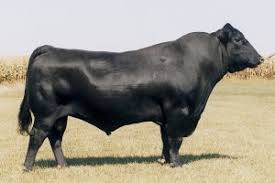
- Age: 17+ years (as of 2015).
- Case Study: Wood Hill Farms reports that their herd bull, New Design 878, lived to the “golden age” of 17 years while remaining active in the breeding record.
- Key Drivers of Longevity:
- Excellent Genetics: Listed as an American Angus Association “Pathfinder” for five consecutive years (2008-2012).
- Active Care: Careful management of feed, nutrition, and environmental stress.
- Legacy: 878 left a huge impact on the herd, with over 16,000 daughters on record.
2. PBR “Woopa” (Bucking Bull)
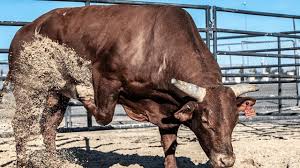
- Age: Active retirement (until 2023).
- Case study: Woopa, the 2021 PBR World Champion Bucking Bull, retired from professional competition and transitioned into a breeding career.
- Key drivers of longevity:
- Retirement Planning: Transitioned from a high-stress competition to a low-stress environment.
- Targeted Nutrition: Fed special grains by its primary caretaker (“bull mother“) to maintain weight and health.
- Physical Care: Received intensive daily care and attention to maintain condition.
3. Bodacious (PBR Bucking Bull) – 16 Years
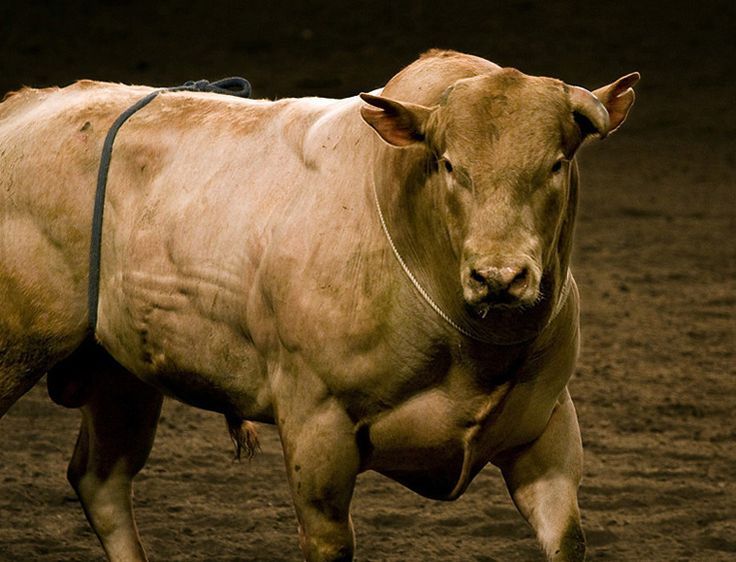
- Active Period: 1992–1995 (PRCA/PBR/BRO)
- Total Outs/Attempts: Approximately 135
- Buck-offs: 127
What Happens After a PBR Bull Retires?
High-performing bulls often become valuable breeding stock.
After retirement, they typically:
- Live on managed farms.
- Enter selective breeding programs.
- Continue to receive high-quality care
Frequently Asked Questions: How Long Does A Bull Live?
Below are the most common questions we receive about bull age, answered based on veterinary research, PBR records, and our own experience at the Omak Stampede.
How long does a bull live naturally?
In a natural, non-commercial pasture setting, bulls can live for 15-25 years, with exceptional cases reaching over 25 under ideal conditions. Their biological lifespan is much longer than their typical commercial working lifespan of 4-5 years.
How long do PBR bucking bulls live?
PBR bucking bulls typically live 10-15 years or more, significantly longer than the average beef cattle, as they receive elite veterinary care and compete for only a few seconds per event. Both famous bulls like Bodacious and Bushwacker lived well after their competitive retirement.
Who is the oldest a bull has ever lived?
Although the typical lifespan of a bull in agricultural production is relatively short, typically around 10 to 15 years, some exceptional, well-cared-for bulls live much longer. A notable example of a long-lived, productive bull was the Black Angus “New Design 878,” which celebrated its 17th birthday in 2015.
Can bulls live over 25 years?
Yes, bulls can live beyond 25 years under ideal conditions, although this is rare in a commercial environment. “Oscar,” a Texas Longhorn raised on organic pasture, reportedly reached 28 years of age – evidence of how environment and management dramatically affect biological potential.
Do horns affect a bull’s lifespan?
Yes, the presence of horns can affect a bull’s lifespan and health, primarily due to management, social, and physiological factors rather than inherent biological limitations. Horns are permanent, constantly growing appendages that serve as tools of defense, social dominance, and temperature regulation.
What’s the average domestic bull lifespan?
The average working age of a domestic breeding bull is usually 5 to 10 years, although their natural lifespan can reach 15 to 20 years or more.
Can a bull be a pet?
Technically yes, a bull can be a pet, but experts and farmers strongly advise against it. While some individual bulls may show a gentle disposition and “dog-like” affection, they remain fundamentally unpredictable animals with immense physical strength.
How does diet affect bull lifespan?
Diet is the main driver of a bull’s health and productive lifespan, as nutritional imbalances often lead to metabolic diseases or physical impairments that result in early death.
Why are breeding bulls culled so early?
Breeding bulls are often neutered early – often before 6 years of age – to maintain high genetic potential, herd productivity, and safety.
Are PBR bulls treated better for longevity?
PBR (Professional Bull Riders) bucking bulls receive elite, specialized care aimed at maximizing their health, performance, and longevity, often living into their middle years. Unlike many commercial bulls who enter the feedlot by the age of three, these highly prized athletes receive advanced nutrition, veterinary care, and physical therapy for injuries.
Do rodeo bulls live shorter lives than farm bulls?
No, rodeo bulls do not generally live shorter lives than farm bulls. In fact, high-performing rodeo bulls often live significantly longer than standard beef cattle.
What shortens a bull’s lifespan most?
The most significant factors that reduce the lifespan of a bull in commercial operations are foot, leg, and structural deformities. Although a bull’s natural lifespan can exceed 10-12 years, these physical defects often force them to be killed at only four or five years of age.
Are PBR bulls treated better for longevity?
Yes, Professional Bull Riders (PBR) bulls are typically treated with extreme care, often described as “royalty” or elite athletes, which plays a significant role in their longevity and performance. Because top-bucking bulls are valuable assets to stock contractors, they receive specialized care, including premium nutrition, advanced veterinary attention, and chiropractors.
A bull’s lifespan is not fixed
A bull’s lifespan is not fixed – it is a direct reflection of the care, nutrition, and environment it receives throughout its life. Bulls that receive proper management regularly live 15-20+ years, and elite bucking bulls often outlive the average beef steer by a decade or more.
About the Author: This article was written by the Omak Stampede Editorial Team, with contributions from livestock professionals who have worked with rodeo bulls and PRCA-certified events for over 20 years. Our team draws on direct experience with bucking bull management, animal welfare standards, and rodeo competition at every level.
Sources: PBR.com Animal Welfare Standards | PRCA.com Official Rules | MSD Veterinary Manual – Breeding Soundness Evaluation | Beef Magazine Annual Nutrition Survey | USDA Livestock Health Reports | ABS Global Bull Semen Records