


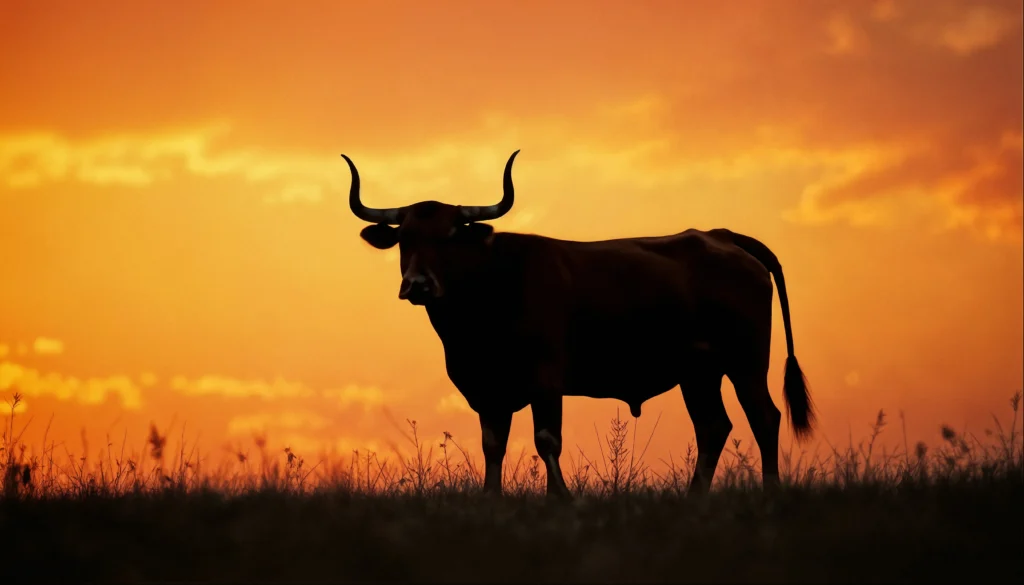
Are Bulls Colour Blind? Yes, Bulls are partially color blind, especially red. Although they can distinguish some colors, they lack the specific receptors needed to see reds.
Specifically to the red-green spectrum, meaning they can’t see red the way we do. It’s the movement of the matador’s cape, not its red color, that provokes them to charge, as they have dichromatic vision and react to movement, not a specific color like red. The red cape (muleta) is used in bullfighting primarily to hide blood stains, not to anger the animal.
Table of Contents
How Bulls See the World
- Dichromatic Vision: Oxen, like all cattle, have only two types of color-detecting cone cells in their eyes, while most humans have three.
- Visible Colors: They primarily see variations of blue and yellow.
- The “Red” Experience: : To an Bull, a red object appears as a dull yellowish brown or brownish gray.
- Color Vision: Bulls have dichromatic vision, seeing colors like yellow, blue, and violet but struggling to distinguish between red and green.
- Provocation: Their charge begins with the rapid, threatening movements of the cap, which they perceive as a threat, just like any fast-moving object.
- Purpose of the Red Cap: The red color is for showmanship and tradition, helping to hide the blood during the final stages of a bullfight.
- Scientific Evidence: Experiments, including one by MythBusters, have shown bulls charging at flags of different colors (red, blue, white), proving that movement, not color, is the key factor.
Why Do They Charge at Red Capes?
The idea that the color red provokes bulls is a popular myth. In reality, they are provoked by the movement, not the color.

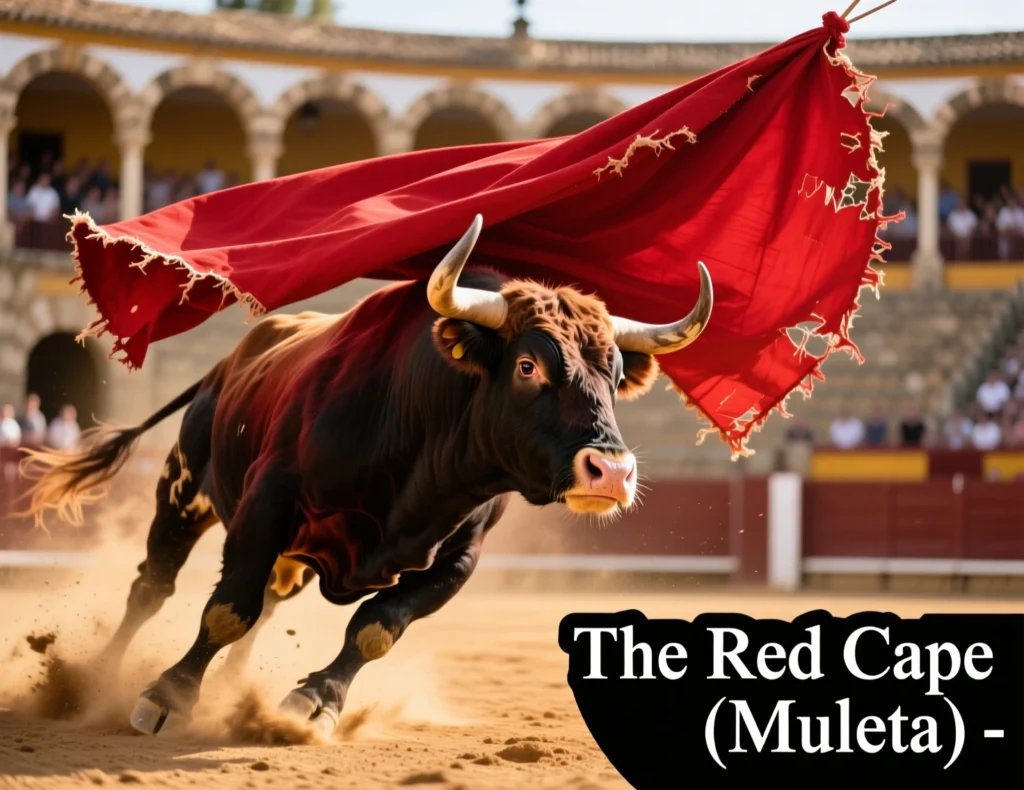
- Movement vs. Color: Experiments (including tests by MythBusters) have shown that bulls will charge at any moving object – whether it is white, blue, or red – but will often ignore a person standing perfectly still, even if that person is wearing bright red.
- The Red Cape (Muleta): In bullfighting, the cape is traditionally red for theatrical reasons and to help mask bloodstains during the later stages of the fight, not to provoke the animal.
How Bull Vision Works: Dichromatic vs. Human Vision
Bull Eye Anatomy and Color Perception
Bulls, like most cattle, are dichromats, which means their eyes are designed to detect primarily blue and yellow wavelengths of light. They lack the long-wavelength (L-cone) receptors that humans use to see red, so they can’t see true red the way people do.
- Bulls see well in blue and yellow tones, but red, orange, and green appear muted or gray.
- Their vision is similar to that of a person with red-green color blindness (protanopia).
- They rely more on movement, contrast, and shape than color to identify threats or objects.
Bullfighting and the Red Cape Myth
The idea that bulls hate the color red is a long-standing myth, but science does not support it. In bullfighting:
- The red cape (muleta) is used in the final phase of the fight, not because the color red angers the bull, but because it is traditional and helps to hide blood stains.
- Bulls charge at a moving cape, not its color. They will react just as aggressively to a blue or yellow cape if it is waved in the same way.
- The main triggers are the sudden movement, the posture of the matador, and the instinct of the bull to defend its place, not the color of the cloth.
The Science of Bull Vision: Understanding Dichromatic Sight
To understand bull behavior, we must first understand how they see the world. Unlike humans, who are trichromats with three types of cone cells that detect color, bulls and other cattle are dichromats. This means they only have two types of cones in their retinas.
- S-cones (short wavelength): Most sensitive to blue and violet light, around 444-445 nm.
- ML-cones (medium-long wavelength): Sensitive to yellow-green light, around 552-555 nm.
This visual system is analogous to red-green color blindness in humans. Bulls do not have cones specifically for perceiving red wavelengths. To a bull, the famous red cap (muleta) would likely appear as a shade of brown, gray, or some other muted tone. They can distinguish between some colors, especially blues and yellows, but the vivid red that irritates human spectators is not part of their visual spectrum.
A Myth Forged in History: Why the Red Cape?
If bulls are color-blind to red, why is the cape red? The answer lies in tradition and practicality, not in animal psychology.
The use of capes in bullfighting goes back centuries, with its modern form taking hold in 18th-century Spain. The red cape, or milita, is used especially in the final, fatal phase of the fight. Its primary historical purpose is gravely practical: the red color helps to hide the bull’s blood. For the audience, the red cape creates a dramatic, symbolic contrast against the sand of the arena, which heightens the spectacle. The myth that the bull is offended by the color was a simple and compelling story that persisted because it fit a simple, dramatic narrative.
Bull Riding: Rules, Scoring, and Safety
How Bull Riding Works
In American rodeo, bull riding is often called “the most dangerous eight seconds in sports” because riders must stay on the bucking bull for 8 seconds using only one hand on the rope.
- The bulls used are specially bred stock, selected for strength, agility and difficulty (turn, kick, body roll).
- The riders wear protective gear (helmet, vest, mouth guard) and are backed by bullfighters (clowns) who distract the bull after the ride.
Bull Riding Rules and Scoring
Each ride is scored out of 100 points:
- 50 points for the rider: Judges evaluate control, balance, rhythm, and technique (no need to touch the bull or yourself with your free hand).
- 50 points for the bull: strength, speed, kicks, turns, and how difficult it is to ride.
Key rules:
- The rider must remain on for 8 seconds. If he touches the bull or himself with his free hand, he is disqualified.
- Spurs are allowed but must be slow; sharp objects or knots in the rope are prohibited.
- In PBR and PRCA events, disqualification is final and may include a fine or suspension for misconduct.
Bull Riding Safety and Injury Stats
Rodeo athletes face some of the highest injury rates in sports:
- Bull riding has an injury rate 10 times higher than football and 13 times higher than ice hockey.
- Common injuries include concussions, broken bones, internal injuries, and spinal cord trauma.
- Safety measures include:
- Mandatory bullfighters in the arena during every ride.
- Strict rules for the slope and arena for the safety of both riders and animals.
Frequently Asked Questions for Are Bulls Colour Blind?
Are bulls completely color blind?
No, they are not completely colorblind. They have dichromatic vision, meaning they see a range of colors, primarily in the blue and yellow-green spectrum, but cannot see red like humans.
What makes a bull charge then?
Bulls charge primarily in response to threatening movement, sudden noise, and perceived confrontation. In bullfighting, the waving cap is the trigger; in rodeo, it is the movement of the rider and bullfighters.
Should I avoid wearing red around bull?
From a visual standpoint, no. The color of your clothing doesn’t matter to livestock. However, you should always avoid sudden movements and respect the animal’s space, regardless of what you’re wearing.
What colors can bulls see?
Bulls can see blue and yellow, and they can differentiate between these colors. They have trouble with red, green, and many of the shades in between, which appear as muted or gray tones.
How dangerous is bull riding?
Bull riding is one of the most dangerous sports, with an injury rate far higher than football or hockey. Riders rely on protective gear, bullfighters, and strict rules to minimize the risk.
What happens to the bull after a bullfight?
In traditional Spanish bullfighting, the bull is killed in the ring until it is pardoned (rare). Its meat is then used for human consumption, pet food, or animal feed.
Separating Myth from Science
The idea that bulls are provoked by the color red is a powerful myth, but science shows that bulls are red-green color blind and react to motion, not color. Whether in bullfighting or rodeo, understanding bull vision helps explain their behavior and highlights the importance of safety, animal welfare, and accurate information.
About the Author: Omak Stampede is a dedicated rodeo sports analyst with over a decade of experience covering professional western sports. Our content is rigorously researched through interviews with PRCA officials, stock contractors, and athletes to provide authentic, accurate, and reliable insights for the modern rodeo fan.