
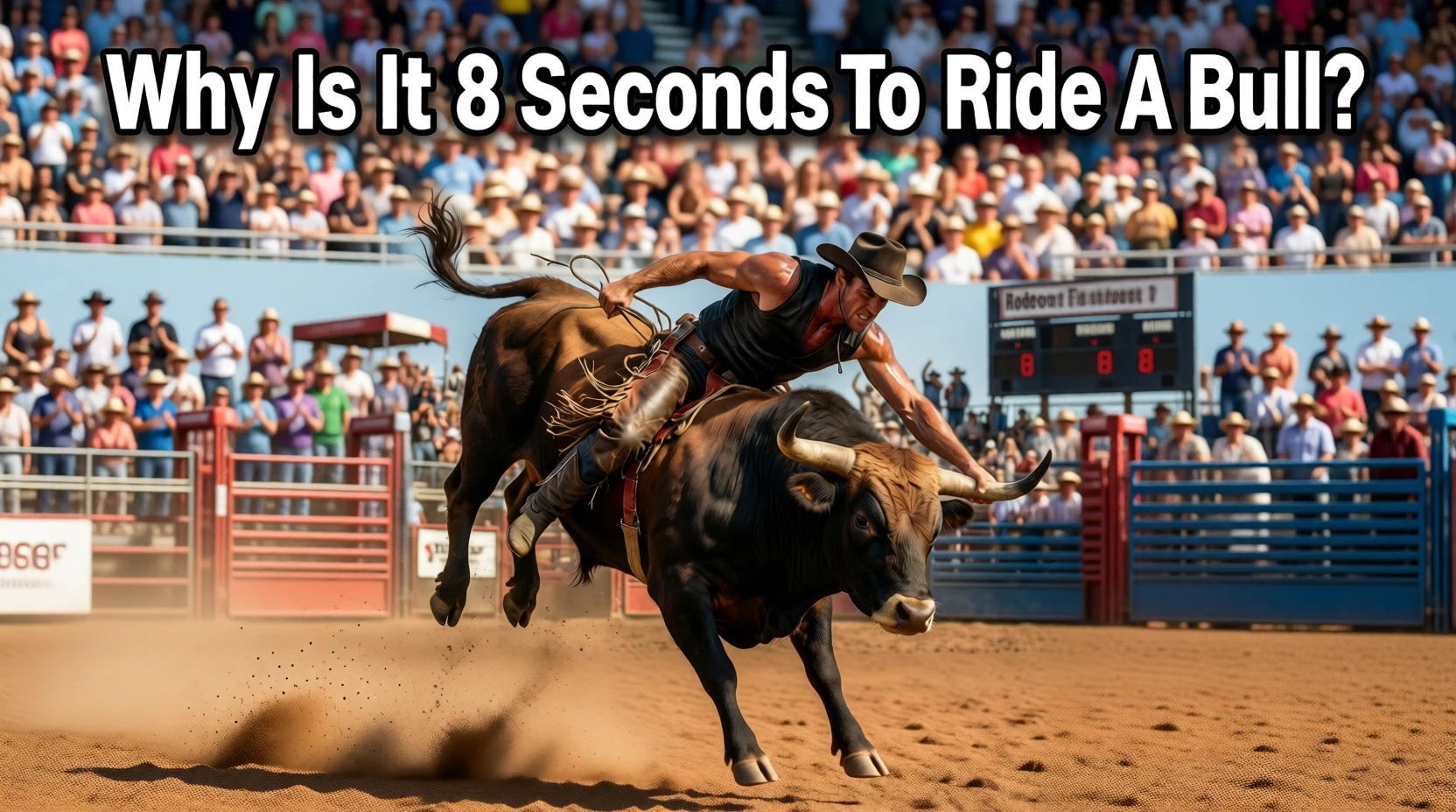
Why Is It 8 Seconds To Ride A Bull? Bull riding is essentially 8 seconds long for safety and fair competition for both rider and bull, establishing a standard challenge where riders must demonstrate control over powerful, bucking animals for a set period of time to achieve a decent score, preventing excessive pressure on the bull and ensuring a consistent ride. The time limit evolved from longer durations (such as 10 seconds) to find a balance where the bulls maintain energy and bucking ability, but the ride remains intensely challenging for the cowboy.
Table of Contents
Key Reasons for the 8-Second Rule:
- Animal Welfare: This prevents the bull from tiring or “overpowering”, preserving its spirit and health for future events, as adrenaline dips and the strength of the booking diminishes after this time.
- Fair Scoring: This provides a consistent standard for scoring, allowing judges to assess the riding skills (balance, control, style) against a difficult but achievable standard.
- Performance Sweet Spot: Eight seconds is seen as the ideal duration to showcase both the bull’s strength and the rider’s ability without making the ride too long or too short.
- Evolution from earlier rules: The rule was adjusted from 10 seconds to 8, finding the best middle ground for a challenging and fair ride.
- Historical Evolution: In early rodeo history, there was no time limit, and cowboys would ride until they were stopped or the animal stopped moving. As the sport became more professional and decided, organizers standardized the time to 10 seconds before settling on 8 seconds in the early 1970s.
- Rider Safety: Known as the “most dangerous eight seconds in sports,” this window is long enough to provide a high-stakes challenge while the human body can withstand the extreme physical punishment inflicted by a 2,000-pound animal.
If a rider continues to walk for 8 seconds without touching the bull or with their free hand, they earn a qualifying ride and receive a score based on their performance and the bull’s action.
This evolution solidified a rule that balanced human challenge with animal athleticism, creating a consistent benchmark for a sport that was becoming increasingly organized and professional.
A Millisecond-by-Millisecond Battle:
- 0-2 Seconds: The explosive “blast out” of the chute. The rider absorbs the bull’s initial, most powerful jumps.
- 2-5 Seconds: The bull establishes its pattern (spin, kick, direction changes). The rider must find rhythm and counter every move.
- 5-8 Seconds: The endurance test. As fatigue sets in, the rider must maintain perfect form – free hand in the air, body centered – until the buzzer sounds.
Are you looking for a breakdown compared to previous legendary Rodeo Riders like How Many Bull Riding Deaths Per Year? & How Many Bull Riders Die A Year?
I can provide a side-by-side comparison of their career earnings and titles.
How Many Bull Riding Deaths Per Year?
or
How Many Bull Riders Die A Year?
Frequently Asked Questions: Why Is It 8 Seconds To Ride A Bull?
Has the rule always been 8 seconds Bull Riding?
No, the rule is not always 8 seconds. Originally, early rodeos had no set time limit, and later, many competitions required a 10-second ride. The 8-second standard was adopted in the mid-1900s to balance the athletic, high-adrenaline performance of the bull with the skill, safety, and endurance of the rider.
What happens if a rider stays on longer than 8 seconds?
If the bull rider continues to ride for longer than the required 8 seconds, the ride continues to be scored for that duration, potentially resulting in a higher score due to additional “style” points (such as aggressive springing). The buzzer sounds at 8 seconds to mark a qualified ride, but the rider usually dismounts shortly after as the bull continues to fly.
Why exactly 8 seconds and not 10 in Bull Riding?
Bull riding is limited to exactly 8 seconds instead of 10 because it marks the optimal point where the bull’s peak adrenaline and booking intensity begin to wear off, balancing the safety of the ride with the animal’s well-being. After 8 seconds, the animal’s performance declines, and increasing the time increases unnecessary risks to both rider and animal.
Do riders get to choose their bulls?
In most professional bull riding scenarios, riders do not choose their bulls. They are assigned through a random draw to ensure fairness. However, in certain, high-level Professional Bull Riders (PBR) events, top-ranked riders may participate in a “bull draft” to select their matchups for certain rounds.
How do judges score bull riding?
50 points each for rider and bull on control, power, and difficulty
Is bull riding cruel to animals?
No – flank straps are humane, bulls bred for bucking thrive, with strict vet oversight.
What’s the injury rate in bull riding?
About 30% per incident, mostly scratches; less than 1 death per 100,000 rides
How has the 8-second rule changed?
Standardized in 1970s; unchanged since for fairness.