
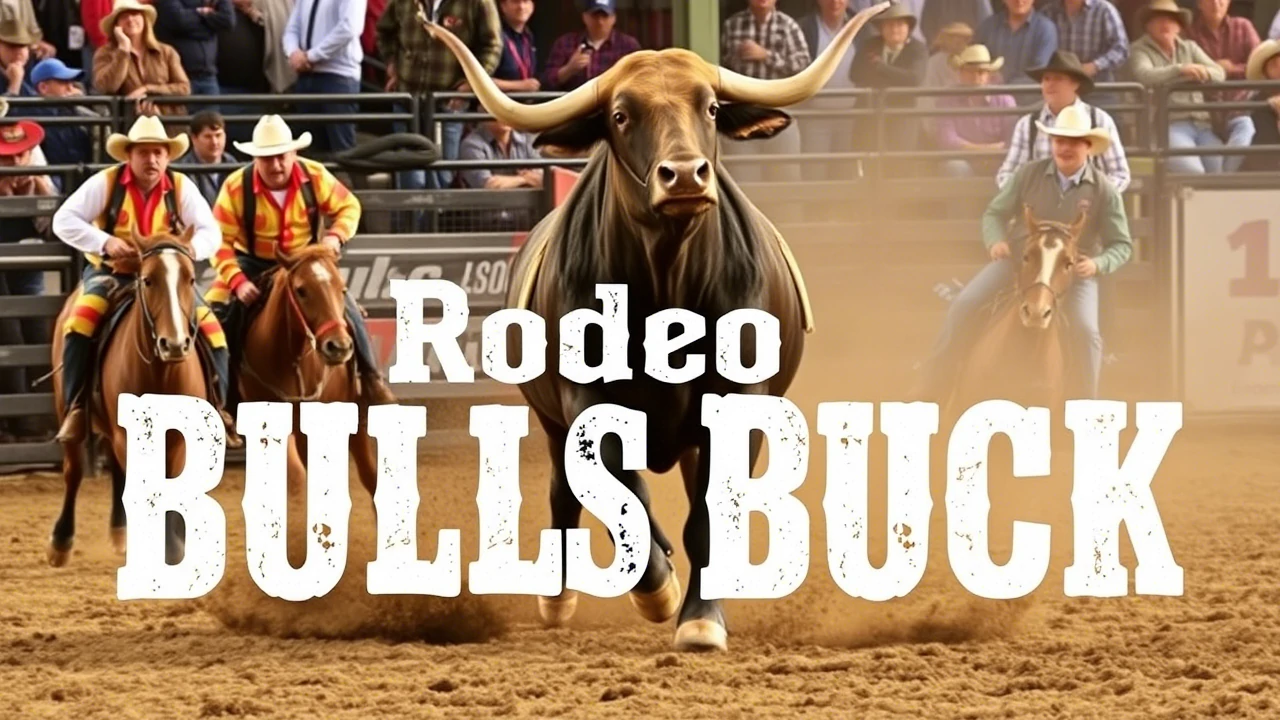

Why Do Rodeo Bulls Buck? Rodeo bulls buck is the result of a combination of genetic traits and equipment, rather than pain inflicted on their sensitive body parts.
Stock contractors selectively breed bulls for a strong, consistent bucking response; American Bucking Bull, Inc. formally tracks these genetics much like horse racing registries track bloodlines. Added to this inherited trait is a sheepskin or neoprene strap placed around the bull’s shoulders just in front of the hips and near the genitals, designed to trigger a quick, vigorous kick the moment the bull leaves the chute.
Whether this combination amounts to humane treatment or discomfort-based stimulation is a genuine, ongoing debate covered further on this page rather than a question with a single official answer.
- Rodeo bulls buck because of two combined factors: they’re selectively bred for a strong bucking response, and a flank strap cinched around their flank just in front of the hips provides the immediate trigger as soon as they leave the chute.
- The flank strap is not tied around the bull’s genitals. This is a long-standing misconception. The pain is felt in the flank area, the soft region between the hips and the rib cage rather than in the testicles.
- Breeding is tracked seriously. American Bucking Bull, Inc. (ABBI) registers bucking bull genetics much like horse racing associations track bloodlines, and semen from elite bucking bulls has sold for thousands of dollars per straw, specifically because buyers are pursuing those bucking traits.
- Whether this is humane is a genuinely contested question, not a settled one. Animal welfare groups argue that the flank strap is deliberately distressing; sources within the rodeo industry maintain that, when properly fitted, it causes no pain and that the bucking behavior is an inherited trait rather than something induced. A 2022 study by the University of Calgary noted a lack of independent scientific research on this issue.
- The most dominant bucking bulls in PBR history are remarkably recent. The record held by Bushwacker, who unseated riders 42 consecutive times, a feat once considered unbeatable (established in 2013), was broken in 2024 by ‘Cool Whip,’ which bucked off riders 48 times in a row before finally being conquered. However, just a few months later, ‘Magic Potion’ broke that record as well and continued to extend the streak through late 2025.
Table of Contents
| 58+ | 42 | 3x | 127/135 |
|---|---|---|---|
| Consecutive buckoffs by Magic Potion as of late 2025, the current all-time PBR record, and still climbing at last report. | Bushwacker’s once-unbreakable consecutive-buckoff streak (set 2013), which stood for roughly 11 years before being broken in 2024. | PBR World Champion Bull titles won by Bushwacker (2011, 2013, 2014), one of only three bulls in PBR history to win three. | Riders bucked off by Bodacious in his career, one of the rankest bulls in PBR’s early history. |
The Thrill and Mystery of Bucking Bulls
Rodeo bull riding captivates millions across America with its sheer intensity and athleticism. Yet, one important question captivates viewers and sparks debate: Why do bulls come to rodeos? This article explores the proven reasons, from genetics to training, industry statistics, and animal welfare – offering real insights and authoritative explanations.
The Main Reason: Genetics and Natural Instinct
Selective Breeding for Bucking
- Almost all modern rodeo bulls are specifically bred for their bucking ability. Over the decades, breeders have selected animals with “athletic” genes – strong hindquarters, powerful legs, and a natural tendency to jump, spin, and kick when a rider is present.
- According to professional breeders, the genetic makeup of bucking bulls differs from that of normal cattle. Their pedigrees are often logged in specialized registries, and champion bulls can be worth millions of dollars.
The Instinct to Dislodge “Predators”
- Bucking is a defensive response. Cattle, especially bulls, evolved to react violently to objects on their backs, as if a predator were attacking. When a human mounts a bull, the animal’s instincts trigger a powerful bucking, twisting response in an attempt to throw the attacker off.
The Two Real Reasons: Genetics and the Flank Strap
1. Selective Breeding
No specific cattle breed is naturally a “bucking breed”; genetics within specific bucking-bull bloodlines matter far more than the breed itself. American Bucking Bull, Inc. (ABBI) exists specifically to register and track these genetics, identifying young bulls with strong bucking potential through events like the “Futurity” and “Classic” before they ever enter the PBR or PRCA arenas. The rewards of successful breeding are immense: Bushwacker, one of the most successful bulls in PBR history, had semen that reportedly sold for around $3,000 per straw at the peak of his career, driven by buyers’ desire to replicate his bucking ability in future generations.
2. The Flank Strap
How the flank strap actually works:
A flank strap is a soft strap typically lined with sheepskin or neoprene that is fastened loosely around the bull’s flank, the area just in front of the hips and behind the rib cage. It is equipped with a quick-release mechanism so that it falls off immediately after the ride ends or once the bull is secured by the pickup crew. Its purpose is to encourage the bull’s hind legs to kick higher and more vigorously the moment it leaves the chute, thereby tapping into the bucking instinct fostered by selective breeding rather than artificially creating that instinct. For a comprehensive breakdown of the equipment itself, please see our guide on bucking straps.
Does the flank strap hurt the bull?
Rodeo industry sources, including the National Animal Interest Alliance, describe a properly fitted flank strap as a cue rather than a pain-inducing device, and note that veterinarians are required on-site at PRCA-sanctioned events. Animal welfare organizations, such as the Vancouver Humane Society, characterize the flank strap as an intentional irritant, citing explanations that it creates “annoyance for the bull”, and argue that the bull’s wild bucking under these conditions is not a natural, voluntary behavior. A 2022 study on veterinary behavior conducted by the University of Calgary at the Calgary Stampede noted that there is a lack of sufficient independent scientific research to definitively resolve the issue; consequently, it is fair to say that this remains a genuinely open and controversial matter rather than one with an official consensus.
Misconceptions and Animal Welfare: A Balanced Look
Common Myths – Debunked
- Myth: Bulls’ testicles are tied or abused
- Fact: This is patently false. The back strap does not touch the genital area and is clearly regulated to prevent abuse.
- Myth: Rodeo Bulls Are Naturally Aggressive
- Fact: Aggression varies by genetics and environment. Most rodeo bulls are spirited, not naturally mean. They are regularly handled, live in herds, and spend most of their year grazing in fields.
Welfare Statistics and Industry Oversight
Watch video for reference:
| Statistic | Source/Study | Figure/Insight |
|---|---|---|
| Bull injury rate at PRCA rodeos | PRCA (2023) | Less than 1% |
| Bull injuries/fatalities (PBR bull outs) | PBR (2020) | 0.0002% per 5,000+ events |
| Bull injury rate from flank straps | PRCA (2023) | 0.08% |
| Average increase in bucking force (strap) | Texas A&M (2022) | 12% |
| Public support for banning flank straps | ASPCA Survey (2023) | 34% |
Studies have been cited that bulls that are sold are at slightly higher risk of bone and muscle injuries than unsold cattle, but deaths and catastrophic incidents are much less common due to improvements in rural animal care and industry regulations.
What Makes a Bucking Bull “Elite,” by the Numbers?
In PBR and PRCA competitions, bull-riding scores are determined on a 50/50 basis between the rider and the bull; the bull’s performance is evaluated by considering factors such as the power of its bucking, its height, and the unpredictability of its movements. A bull’s score in the mid-40s is considered ‘elite,’ while achieving a score of 48 or higher is historically extremely rare. In the nearly three-decade history of PBR competitions, there have been only a few instances where the 48-point milestone was surpassed, and ‘Bushwacker’ is one of only two bulls to have achieved this feat more than once.
The All-Time Consecutive-Buckoff Record, Bull by Bull
How the hardest record in bull riding has fallen twice in under two years. Scale: Magic Potion’s latest reported total = 100%.
Sources: PBR.com, May 2025 · PBR.com, Feb. 2025. Magic Potion’s streak was still active and climbing as of the most recent available report (late 2025); the 58 figure is a snapshot, not a final total.
Famous Bucking Bulls: Case Studies in Genetics and Dominance
Four bulls whose careers illustrate what selective breeding for bucking produces at the extreme end.
| Bull | Career | Signature record |
|---|---|---|
| Bushwacker | 2009–2014; died 2024, age 18 | 3x PBR World Champion Bull; 64 buckoffs in 66 premier-series outs; former record of 42 consecutive buckoffs |
| Bodacious | Early-to-mid 1990s | Bucked off 127 of 135 riders; one of two bulls to win world titles in both PBR and PRCA; retired for safety in 1995 |
| Man Hater | 2024–present | Back-to-back YETI PBR World Champion Bull (2024, 2025) — just the 7th bull in PBR history to repeat |
| Magic Potion | 2025–present (active) | Current all-time consecutive-buckoff record holder, still extending the streak as of late 2025 |
Sources: Wikipedia — Bushwacker (bull) · PBR.com — Bodacious profile · PBR.com, May 2025.
Expert and Industry Opinions: The Human Perspective
- Matt Scharping, Phenom Genetics Breeder: “Bulls are bred for what they do. It’s a different gene pool – it’s like a hunting dog or a working dog that’s excited to do its job. These bulls know when it’s play time.”
- Stock Contractor Insights: Contractors pay attention to animal health and longevity because champion bulls are valuable capital, often leading a pampered life in the fields between events.
- Animal Behaviorists and Ethical Critics: Animal welfare groups raise valid concerns about stress and injuries, pointing to increased salivation, “white-eyes,” and the startling effect of rodeo arenas as possible indicators of distress. Independent reviews call for regular monitoring, transparent reporting of injuries, and more regulation.
Case Study: The Path of a Champion Bucking Bull
A bull calf destined for rodeo?:
- Selective Breeding: Born from parents with proven bucking records.
- Initial Evaluation: Tested for instincts to stop using a dummy device at 1-2 years of age.
- Advanced Training: Chutes, rodeo settings, and finally in front of live riders.
- Competition and Retirement: The best bulls enter PBR/PRCA events, average up to 10 rides/year, and are retired to well-cared-for stud or ranch life.
Frequently Asked Questions: Why Do Rodeo Bulls Buck?
Is it true that they tie the bull’s testicles to make it buck?
No. That’s a widely repeated myth. The flank strap is tied around the flank area, not the genitals, just in front of the hips, behind the ribcage.
Are bucking bulls specifically bred to buck?
Yes, American Bucking Bull, Inc. officially registers and tracks bucking bull genetics, and elite bloodlines command significant value, semen from top bulls has sold for thousands of dollars per straw, particularly because buyers seek to replicate those bucking traits.
What is the highest bull score ever recorded?
In PBR/PRCA competitions, bulls can be awarded a maximum of 50 points, and scores of 48 or higher are historically extremely rare; very few such instances have been recorded in the three-decade history of PBR competitions. ‘Bushwacker’ is one of only two bulls to have achieved a score of over 48 points more than once.
Who is the current PBR World Champion Bull?
Man Hater, owned by Jane Clark and Gene Owen, won the title in both 2024 and 2025, becoming just the seventh bull in PBR history to win back-to-back championships
What happens to bucking bulls after they retire?
Elite bucking bulls are typically retired to their owners’ ranches rather than sold for slaughter, often continuing to earn income through breeding. Bushwacker, for example, spent a decade in retirement on his owner’s ranch before passing away peacefully in 2024.
Sources & Reference
- PBR Official Site — Bull Athlete Profiles
- PBR.com — Three-Time World Champion Bull Bushwacker Passes Away
- PBR.com — Magic Potion Breaks Cool Whip’s Record Streak
- PBR.com — Cool Whip’s Historic Buckoff Streak Ends at 48
- PBR.com — Man Hater Claims Second-Straight World Champion Bull Honors
- Monster Energy — Jose Vitor Leme Wins 3rd PBR World Title
- Wikipedia — Bushwacker (bull)
- NAIA Online — Professional Rodeo Horses Are Bred to Buck
- Vancouver Humane Society — The Truth About Bull Riding
- University of Calgary — How Do Bucking Bulls Really Feel About Rodeos?